RSS

What Is Included in a Builder Base Price in Edmonton?

Short answer: A builder's base price is the cost of one floor plan built to that builder's standard specification on a standard lot. It usually covers the house itself, the standard finishes and the mandatory Alberta new home warranty. It often does not cover the lot premium, upgrades, landscaping, fencing, a deck, window coverings, appliances or a finished basement, and you need to ask whether GST is in the number. Every builder draws the line in a different place, so compare the all-in cost, not the base price.

By Jay Lewis, REALTOR® | RE/MAX Excellence · Updated October 15, 2026

This article is part of my Edmonton New Construction Buyer's Guide.

Free download: my New-Construction Buyer Checklist. Two printable pages, from your first show home visit to your one-year warranty, including what to ask about the price before you fall for a floor plan.

I've worked in new construction for more than 25 years, on the trades side (framing, renovations and full contract builds) and the sales side. I've priced houses from the builder's side, so I know how a base price is put together and what gets left out to keep the number on the sign low. I'm not a home inspector, engineer or lawyer, and I'll tell you when you need one. I also list homes for some builders. If you're interested in one of them, I'll tell you up front and explain how representation works.

What does "base price" actually mean?

It is the starting price for a specific model, built with the builder's standard materials, on a lot with no premium. Think of it as the price of the house before you make a single choice. The home you walk through in the show home is almost never the base home. Show homes are built with upgrades so they look their best, and the difference between the show home and the base specification can be large.

The document that tells you what you are getting is the specification sheet, sometimes called the standard features list. Ask for it before you compare anything. If a feature isn't on that sheet or in your contract, assume it isn't included.

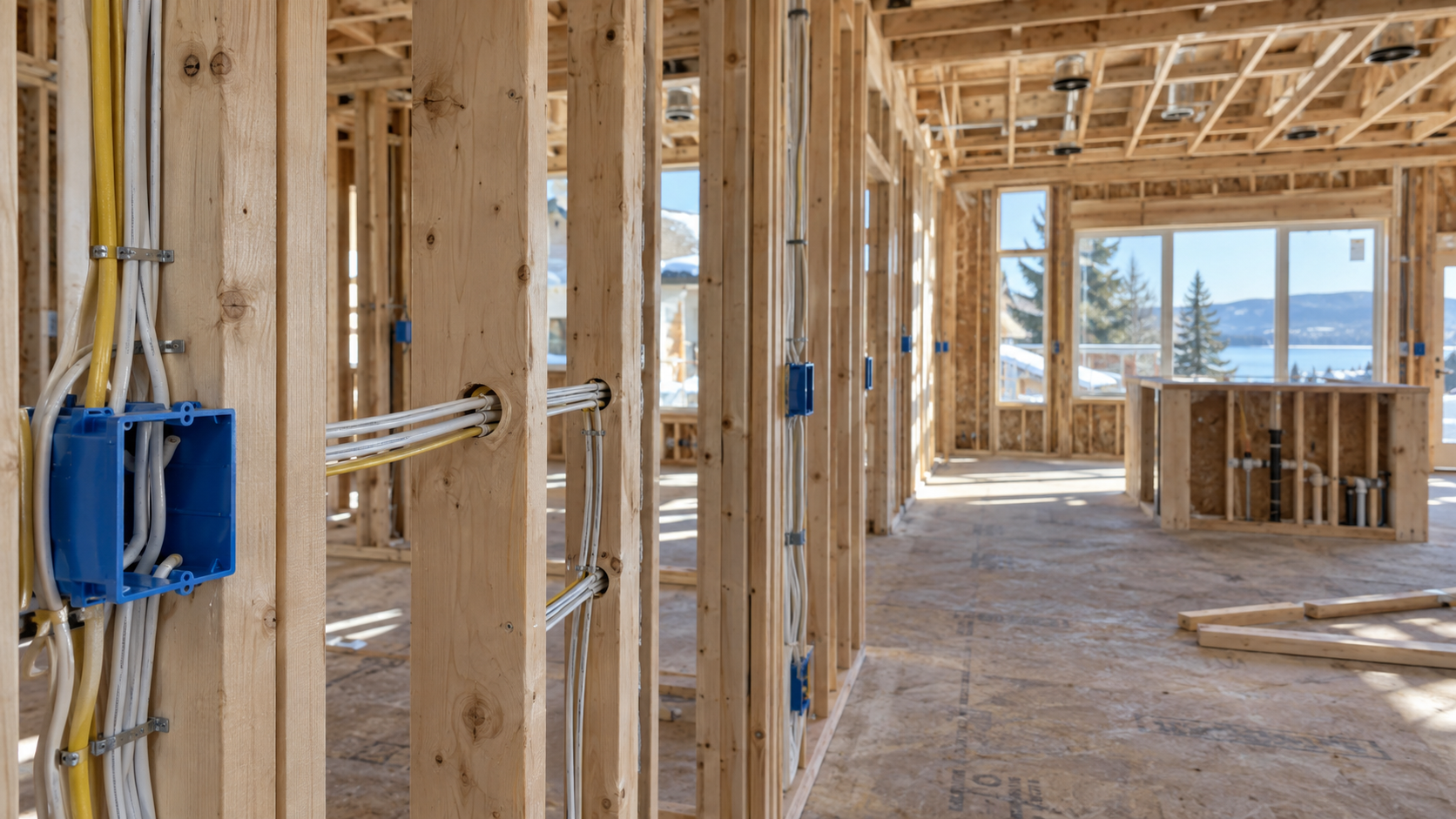
An unfinished basement in a new home with exposed studs, a furnace and a hot water tank

Illustrative image.

What is usually included?

This varies by builder, so use it as a list of things to confirm:

  • The house built to the standard plan, with the standard exterior

  • Standard flooring, cabinets, counters, plumbing fixtures and lighting

  • Heating and hot water equipment to the builder's standard

  • An unfinished basement

  • A garage, where the plan has one, and often a basic driveway and front walk

  • Rough grading of the lot

  • New home warranty coverage. Every new home in Alberta has to be enrolled with a warranty provider, with coverage of at least 1 year for labour and materials, 2 years for delivery and distribution systems such as electrical, plumbing and heating, 5 years for the building envelope and 10 years for major structural components.

What is usually extra?

  • The lot premium. Backing onto a park, a pond or a walking trail, a bigger pie lot or a walkout basement lot all cost more. I explain how they're priced in what a lot premium is.

  • Upgrades. Anything above the standard specification: flooring, counters, cabinets, extra pot lights, a side entry, nine-foot basement ceilings. See which upgrades are worth it.

  • Landscaping and fencing. Some builders include front sod and a tree, some include nothing. Ask what the community requires you to finish and by when, and whether a landscaping deposit is held back until you do.

  • A deck. Often not included, even when the plan shows a patio door several feet above the ground.

  • Window coverings and appliances. Sometimes included as a promotion, often not.

  • Basement development. A finished basement or a legal suite is priced separately.

  • Air conditioning, garage heaters and similar items. Almost always extra.

What other costs come with a new build?

The builder's price is not the whole bill. These are the costs buyers most often forget to budget for. I've left out dollar amounts because they depend on the home, your lender and your lawyer, and they change. Ask each of them for a written estimate before you sign.

  • Legal fees. Your lawyer handles the purchase and registers your title and mortgage.

  • Land title and mortgage registration fees. The Alberta government charges these when your title and mortgage are registered.

  • Mortgage default insurance. Required if your down payment is under 20% of the price, and usually added to the mortgage.

  • GST, if it isn't included in the price, less any rebate you qualify for. I explain it in the GST rebate on a new home.

  • Adjustments on possession day. Your share of the property tax and any utilities the builder has already paid.

  • Home insurance. Your lender will want proof of it before the mortgage funds are released.

  • The extras above that aren't included: landscaping, fencing, a deck, window coverings and appliances.

  • Moving, and setting up your utility accounts.

Prices and fees change often with market conditions and world events, so treat any figure you're quoted as an estimate. I'm not a lawyer or a mortgage broker. Your lawyer and lender will give you the real numbers.

Is GST included in the base price?

Ask, and get the answer in writing. New homes are subject to GST. Many builders in the Edmonton area advertise prices with GST included and the rebate assigned to the builder, but not all do, and the wording matters. I go through the rebate rules in the GST rebate on a new home in Alberta. Your lawyer should confirm how GST is handled in your contract.

How do I compare two builders fairly?

Put both homes on one page and fill in the same lines for each:

  • Base price, and whether GST is in it

  • Lot premium

  • The upgrades you would actually choose

  • Landscaping, fencing and a deck

  • Appliances and window coverings

  • Any promotion or credit, and what it can be spent on

  • Deposit schedule and possession date

The home with the lower base price is often not the cheaper home. I've seen two houses a few thousand dollars apart on the sign end up tens of thousands apart once everything was added. Then compare both against a resale home nearby that is already landscaped, fenced and finished. I look at that trade-off in new construction versus resale.

Prices and inclusions change often with market conditions and world events, so treat any figure from a show home or a price list as an estimate until it is written into your contract.

Can I negotiate what's included?

Often, yes. In most communities around Edmonton this fall there are more new homes for sale than buyers, and builders are more willing to add landscaping, appliances or upgrades than to lower the price. I cover where the room is in negotiating with a builder in Edmonton.

Get my free New-Construction Buyer Checklist

Two printable pages covering every stage from your first show home visit to your one-year warranty.

Get the free checklist →

Frequently asked questions

Does a builder's base price include the lot?

Usually it includes a standard lot. Lots that back onto a park or pond, larger lots and walkout lots carry a premium that is added on top.

Is landscaping included in a new home price in Edmonton?

It depends on the builder. Some include front sod and a tree, and some include nothing. Ask what is included, what the community requires you to finish and whether a deposit is held until it's done.

Are appliances included in a new build?

Sometimes, often as a promotion. If they are included, have the list written into the contract.

Is the show home the same as the base home?

Almost never. Show homes are built with upgrades. Ask for the standard specification sheet and a list of the upgrades in the show home.

What hidden costs come with buying a new build in Edmonton?

Beyond the builder's price, budget for legal fees, land title and mortgage registration fees, home insurance, and your share of property tax and utilities on possession day. Add mortgage default insurance if your down payment is under 20%, plus anything the builder doesn't include, like landscaping, fencing, a deck, window coverings or appliances. Ask your lawyer and lender for written estimates.

Planning show home visits?

Text me first at 780-220-8449, or book a 20-minute call. I'll line up the all-in cost of the homes you're considering so you can compare them fairly. I work with buyers in Edmonton, Sherwood Park, Fort Saskatchewan, Devon, Spruce Grove and Stony Plain.

Jay Lewis | REALTOR® | RE/MAX Excellence

Sources:Government of Alberta: new home warranty overview · Canada Revenue Agency: First-Time Home Buyers' GST/HST Rebate

Want to see more Edmonton real-estate updates from JaySells.ca in Google? Add JaySells.ca as a Preferred Source.


This article is general information, not legal, tax or mortgage advice. Prices, inclusions and builder promotions are estimates that change often with market conditions and world events. Confirm the details with the builder and a real estate lawyer before you sign.

Read

Can You Negotiate With a Builder in Edmonton in 2026?

Short answer: Yes, and right now the numbers are on the buyer's side. In my MLS® pulls from late September and early October 2026, new detached family homes had about 7 months of supply in Edmonton and between 7 and 9 months in Leduc, Stony Plain, Beaumont, Spruce Grove and Fort Saskatchewan. Builders rarely drop the sticker price, but they will often move on upgrades, landscaping, appliances, closing costs and possession dates, especially on a finished home that has been sitting.

By Jay Lewis, REALTOR® | RE/MAX Excellence · Updated October 12, 2026

This article is part of my Edmonton New Construction Buyer's Guide.

Free download: my New-Construction Buyer Checklist. Two printable pages, from your first show home visit to your one-year warranty, including the questions to ask before you talk price.

I've worked in new construction for more than 25 years, on the trades side (framing, renovations and full contract builds) and the sales side. I've been on the builder's side of this conversation, so I know what a finished house costs to carry and why a builder would rather give you a deck than cut the price. I'm not a home inspector, engineer or lawyer, and I'll tell you when you need one. I also list homes for some builders. If you're interested in one of them, I'll tell you up front and explain how representation works.

Why are builders negotiating right now?

Supply. Months of inventory is the number of homes for sale divided by how many sell in a month. Under about four months favours sellers. Over about six favours buyers. Here is what I found for detached family homes with three or more bedrooms above grade, two or more full baths and an ensuite:

  • Edmonton: about 7.3 months for new construction and 3.8 for resale

  • Fort Saskatchewan: about 9.2 months new and 1.2 resale

  • Leduc: about 7.5 months new and 2.6 resale

  • Stony Plain: about 7.5 months new and 1.4 resale

  • Beaumont: about 7.0 months new and 3.8 resale

  • Spruce Grove: about 6.8 months new and 2.4 resale

  • Sherwood Park and St. Albert: about 3.5 months new and about 1 month resale

So it depends where you are looking. In Sherwood Park and St. Albert, new homes are selling quickly and a builder has less reason to move. In the other communities, resale homes are selling fast while new homes wait, and that gap is your room to negotiate. These figures change often with market conditions and world events, so treat them as a snapshot. I keep current numbers for each area in my community guides.

Rolled blueprints and a coffee cup on a kitchen island in a new home

Illustrative image.

What will a builder actually negotiate?

Builders protect their sticker price, because the next buyer and the appraiser will both look at what the last home sold for. They are usually more flexible on things that don't show up as a price cut:

  • Upgrades. Flooring, counters, cabinets, lighting, a finished basement or a side entry. I cover which ones hold their value in which new home upgrades are worth it.

  • What's left to finish. Landscaping, fencing, a deck, blinds and appliances are handled differently by each builder. Ask for them to be included and written into the contract.

  • Lot premiums. A premium on a lot that hasn't sold is sometimes negotiable. See what a lot premium is.

  • Closing costs. Some builders will contribute to legal fees or offer a credit on possession day.

  • Deposit and dates. A smaller deposit, a staged deposit or a possession date that fits the sale of your current home. I explain deposits in how builder deposits work in Alberta.

  • Price. It does happen, mostly on finished homes that have been listed for months, at a builder's year-end, or on the last few homes in a phase.

How does a builder decide what to give up?

I've priced and built houses, so this is how I'd explain the other side of the table.

The price is the last thing to move. Every sale in a phase becomes the comparison for the next buyer and for the appraiser the bank sends out. If a builder drops one home by $20,000, the homes beside it are harder to sell at the old price. So a builder will usually spend $20,000 on you in other ways first.

Upgrades cost the builder less than they cost you. A builder buys flooring, counters and appliances at trade prices and in volume. An upgrade listed at $10,000 on the selections sheet did not cost the builder $10,000. That's why upgrades are the easiest thing to ask for, and why I compare the offer against what the same work would cost you after possession.

A finished house has a monthly bill. Interest on the construction loan, property tax, heat, power and insurance all keep running, and a house that sits through winter needs someone checking on it. Every month it stays unsold, the builder's margin shrinks. That is the builder's real deadline, and the listing date tells you how close it is.

Unbuilt homes are a different conversation. Before the foundation goes in, the builder has spent very little. There is less pressure, so expect a promotion or an upgrade allowance, and expect the builder to hold firm on anything structural once the permit drawings are done.

Which homes have the most room?

A finished home costs the builder money every month it sits: interest, property taxes, utilities and insurance. That is why a quick possession home usually has more room than a home that hasn't been started.

Look at how long a home has been listed. In my October 1 pull, new family homes for sale in Easton in Spruce Grove had been listed for a median of 100 days, and in Greenbury the median was 148 days. A home that has been through a summer and a fall without selling is one the builder wants to move.

A pre-construction home is different. The builder hasn't spent the money yet, so there is less pressure. You are more likely to get upgrades or a promotion than a lower price.

How do I negotiate without paying for it later?

  • Compare all-in cost. Two homes at the same price can be thousands apart once you add GST, landscaping, fencing, appliances and window coverings. Line them up before you decide which one is the deal.

  • Know the recent sales. A builder's price list is an asking price. What matters is what similar new and resale homes nearby actually sold for.

  • Get it in writing. Anything a sales representative promises has to be in the purchase contract or an addendum. Brochures, emails and show homes are not the contract.

  • Check the builder and the warranty. Confirm the builder's licence is active in the Government of Alberta's builder registry, and that the home is enrolled for warranty coverage.

  • Have a lawyer read it. Builder contracts are written by the builder's lawyers. Have your own real estate lawyer review it before your conditions come off.

What is not worth negotiating?

  • Structural changes after permits. Moving walls, windows or stairs once drawings are approved costs the builder time, and you will pay for it.

  • Warranty. Coverage is set by Alberta's rules and the warranty provider. A builder can't trade it away, and you shouldn't accept less of it for a lower price.

  • A discount in place of work the house needs. If the grading, a rough-in or the subfloor isn't right, I'd ask for it to be fixed and written into the contract. A credit doesn't fix it.

Does it cost me anything to have my own REALTOR®?

The show home staff work for the builder. Their job is to sell that builder's homes at the best price for the builder. Many builders will pay a buyer's agent, but they often require your REALTOR® to be introduced on your first visit, so text me before you walk into a show home. I explain the difference in show home consultant versus buyer's agent.

Get my free New-Construction Buyer Checklist

Two printable pages covering every stage from your first show home visit to your one-year warranty.

Get the free checklist →

Frequently asked questions

What can you actually negotiate with a builder in Edmonton?

Most often upgrades, landscaping, fencing, a deck, appliances, window coverings, closing costs, the deposit schedule and the possession date. A lower price is possible, mostly on finished homes that have been listed for months.

Why won't a builder just lower the price?

Because each sale becomes the comparison for the next buyer and for the bank's appraiser. A builder would usually rather add upgrades worth the same amount, which cost the builder less than their list price.

Can you negotiate the price of a new build in Edmonton?

Sometimes, mostly on finished homes that have been listed for a while. More often a builder will add upgrades, landscaping, appliances or a closing credit instead of lowering the price.

When is the best time to negotiate with a builder?

When the builder has finished homes that aren't selling. In my fall 2026 pulls that describes most communities around Edmonton except Sherwood Park and St. Albert. The end of a builder's fiscal year and the last homes in a phase can also help.

Is a quick possession home easier to negotiate than a pre-construction home?

Usually, yes. A finished home costs the builder money every month it sits, so there is more reason to make a deal.

Are the builder's promises binding if they aren't in the contract?

Assume they are not. Have every incentive, upgrade and date written into the purchase contract, and have a real estate lawyer review it.

Planning show home visits?

Text Jay Lewis first at 780-220-8449, email jay@jaysells.ca, or book a 20-minute call. I'll pull the current numbers for the community you like and tell you which homes have room to move. I work with buyers in Edmonton, Sherwood Park, Fort Saskatchewan, Devon, Spruce Grove and Stony Plain.

Jay Lewis | REALTOR® | RE/MAX Excellence

Sources: REALTORS® Association of Edmonton MLS® data pulled by Jay Lewis, September 28 to October 4, 2026 (detached homes, 3+ bedrooms above grade, 2+ full baths, ensuite; new construction means Occupancy is New/Never Occupied; Edmonton and Spruce Grove use 30 days of sales, the other communities 90 days) · Government of Alberta: new home warranty overview · Government of Alberta: builder registry

Want to see more Edmonton real-estate updates from JaySells.ca in Google? Add JaySells.ca as a Preferred Source.

This article is general information, not legal, tax or mortgage advice. Market figures, prices and builder incentives are estimates that change often with market conditions and world events. Confirm the details with the builder and a real estate lawyer before you sign.

Read

Are Edmonton Home Prices Dropping in Fall 2026?

Short answer: Some are, and it depends on the type of home. In September 2026 the average sale price in the Greater Edmonton Area was $466,080, up 2.9% from a year earlier and down 0.8% from August. The benchmark price was $423,100, down 0.3% from a year earlier. Detached homes are holding their value, while townhomes and semi-detached homes sold for 4.5% and 4.8% less than last September. With 8,062 homes for sale and sales down 10.3%, buyers have more room to negotiate than they did a year ago.

By Jay Lewis, REALTOR® | RE/MAX Excellence · Updated October 9, 2026

This article is part of my Edmonton New Construction Buyer's Guide.

Free download: my New-Construction Buyer Checklist. Two printable pages, from your first show home visit to your one-year warranty.

I've worked in new construction for more than 25 years, on the trades side (framing, renovations and full contract builds) and the sales side. I read the monthly market release the way I used to read a set of drawings, starting with the parts that carry the load. For prices, that is supply. The numbers below are from the REALTORS® Association of Edmonton's September report, released October 2, 2026.

What did Edmonton home prices do in September 2026?

Home typeAverage priceFrom AugustFrom Sept. 2025Average days on market
Detached$569,820down 1.1%up 2.9%42
Semi-detached$412,974down 2.7%down 4.8%43
Row/townhome$289,640down 2.9%down 4.5%45
Apartment condo$208,672down 3.1%up 0.6%50
All residential$466,080down 0.8%up 2.9%44

Every category was lower than in August, which is normal for fall. The year-over-year column tells you more. Detached homes are still ahead of last September. Semi-detached homes and townhomes are behind.

The average price moves with the mix of homes that happen to sell in a month. The MLS® Home Price Index benchmark tracks a typical home, so I watch it too:

  • Composite benchmark: $423,100, down 0.9% from August and down 0.3% from a year earlier.

  • Single-family benchmark: $518,900, down 1.1% from August and unchanged from a year earlier.

  • Townhouse benchmark: $269,500, down 3.4% from a year earlier.

  • Apartment benchmark: $197,400, down 1.1% from a year earlier.

The median sale price was $435,000, the same as September 2025. So the typical Edmonton home is worth about what it was a year ago, and the attached homes at the lower end of the price range have slipped.

Front steps of a home in autumn with two pumpkins and fallen leaves

Illustrative image.

Why are prices softening?

More homes are for sale and fewer are selling.

  • Sales: 1,959, down 8.8% from August and down 10.3% from September 2025.

  • New listings: 3,864, up 7.2% from August and up 11.3% from a year earlier.

  • Inventory: 8,062 homes for sale at month end, up 16.7% from a year earlier.

  • Days on market: 44 on average, five more than a year ago.

By my math that is about four months of inventory. The sales to new listings ratio was 51%, compared with 63% in September 2025. That is roughly one sale for every two new listings. The Association's table goes back to 2022, and this is the most homes for sale at the end of any September in it.

The Association's 2026 Board Chair, Darlene Reid, said typical seasonal trends suggest sales won't rebound until after year end, and that "the rising inventory in our market could soften that growth even further."

What does this mean if you are buying a new build?

New homes are part of the supply. CMHC counted 18,544 homes under construction in the Edmonton area in August 2026, and its September count comes out October 16. As those homes are finished, they compete with resale listings for the same buyers.

That shows up as leverage. A builder holding a finished home has carrying costs every month, so builders with finished homes are negotiating on upgrades, closing costs or price. A home that hasn't been started yet gives you less room on price and more choice on the plan and finishes. I compare the two in new construction vs. resale in Edmonton, and the supply numbers are in is Edmonton a buyer's market?

I also list homes for some builders. If you're interested in one of them, I'll tell you up front and explain how representation works.

How do the towns around Edmonton compare?

Here are September's sales and average prices from the same report. One month in a smaller town can be a few dozen sales, so the average swings with which homes sold. Treat these as a snapshot.

CommunitySales, Sept. 2026Average price, Sept. 2026Average price, Sept. 2025
Sherwood Park (detached)79$595,120$578,420
St. Albert (detached)66$669,000$570,909
Spruce Grove (detached)46$516,500$519,729
Fort Saskatchewan (detached)44$505,549$521,297
Leduc (detached)48$481,631$486,843
Beaumont (all residential)33$546,989$566,249
Stony Plain (all residential)28$330,954$394,721
Devon (all residential)12$390,167$372,036

Within the City of Edmonton, the detached average was $547,426, compared with $540,159 a year earlier.

What about interest rates?

The Bank of Canada's policy rate is 2.25%. It held there on September 2, and the next decision is October 28, 2026. If you have a rate hold, ask your mortgage broker when it expires and what happens if the rate changes before your possession date. If you don't have a broker, the team at Mortgages For Less can go through it with you.

Should you wait for prices to drop more?

Nobody can tell you where prices will be in the spring, and I won't pretend to. What the September numbers do show:

  • If you are buying: you have more homes to choose from than last fall, and homes are taking longer to sell. That usually means more room for conditions, for time to think, and for negotiating.

  • If you are selling: you are competing with more listings than a year ago. Price against what is for sale today, because last spring's sales are already out of date.

  • If you are doing both: the two sides tend to offset each other. What you give up on your sale you can often get back on your purchase.

Home prices change often with market conditions and world events. These figures are averages and benchmarks for one month. They are estimates of the market and say little about what one particular house is worth.

Get my free New-Construction Buyer Checklist

If a new build is on your list this fall, the checklist walks you from your first show home visit to your one-year warranty.

Get the free checklist →

Frequently asked questions

What is the average home price in Edmonton right now?

In September 2026 the average sale price for all residential homes in the Greater Edmonton Area was $466,080, and the average detached home sold for $569,820. Prices change often with market conditions and world events.

Are Edmonton home prices going down?

Compared with a year earlier, the overall average is up 2.9% and the benchmark is down 0.3%. Semi-detached homes are down 4.8% and townhomes are down 4.5%. Every category was lower than in August, which is typical for fall.

Is Edmonton a buyer's market in fall 2026?

It is leaning that way. There were 8,062 homes for sale at the end of September, up 16.7% from a year earlier, and the sales to new listings ratio was 51%.

How long does it take to sell a home in Edmonton?

The average was 44 days on market in September 2026, five days longer than a year earlier. Detached homes averaged 42 days and apartment condos 50.

Thinking about a move this fall?

Text me first at 780-220-8449, or book a 20-minute call. I'll pull the current numbers for your neighbourhood and price range so you can decide on facts. I work with buyers and sellers in Edmonton, Sherwood Park, Fort Saskatchewan, Devon, Spruce Grove, Stony Plain, St. Albert, Leduc and Beaumont.

Jay Lewis | REALTOR® | RE/MAX Excellence

Sources: REALTORS® Association of Edmonton: Monthly Market Statistics, September 2026 · CMHC housing starts, August 2026 · Bank of Canada: policy interest rate

Want to see more Edmonton real-estate updates from JaySells.ca in Google? Add JaySells.ca as a Preferred Source.
This article is general information, not legal, tax or mortgage advice. Market statistics are estimates that change often with market conditions and world events. Average and benchmark prices are not a valuation of your home.

Read

How Do Builder Deposits Work in Alberta?

Short answer: A builder deposit is money you pay toward the purchase price before your new home is finished, usually in stages set out in your purchase contract. How it is protected depends on what you are buying. For a new condominium unit, Alberta's Condominium Property Act requires your payments to be held in a trust account or covered by an approved purchaser protection program. For a house or duplex on its own lot, protection comes from your contract and from optional deposit insurance, so ask for the details in writing before you pay.

By Jay Lewis, REALTOR® | RE/MAX Excellence · Updated October 7, 2026

This article is part of my Edmonton New Construction Buyer's Guide.

Free download: my New-Construction Buyer Checklist. Two printable pages, from your first show home visit to your one-year warranty.

I've worked in new construction for more than 25 years, on the trades side (framing, renovations and full contract builds) and the sales side. On a build, the deposit is the first money that moves, and it moves months before there is a finished house to walk through. Buyers ask me about paint colours and lot sizes all day. Very few ask where their deposit sits while the house goes up. I'm not a home inspector, engineer or lawyer, and I'll tell you when you need one. Several of the questions below are lawyer questions, and I've marked them.

What is a builder deposit?

It is money you pay the builder (or the builder's lawyer) when you sign a purchase contract and at set points afterward. It shows you are committed, and it is credited toward the purchase price when you take possession. The rest of the price is paid through your lawyer on possession day, from your down payment and your mortgage.

There is no single standard amount. Each builder sets its own schedule, and the schedule for a quick possession home can look different from a build that starts with an empty lot. Deposit amounts change often with market conditions and world events, so treat any figure you hear in a show home as an estimate until it is written into your contract.

A closed folder, a small wooden model house and a pen on a desk by a window

Illustrative image.

When do I pay the deposit?

Deposits are often split into stages. Your contract should answer each of these:

  • How much is due when you sign?

  • Is more due when you remove your conditions, such as financing or the sale of your current home?

  • Is a separate deposit due for upgrades or changes you choose after signing?

  • Who is each payment made out to: the builder, or a law firm in trust?

  • When is the balance due, and how does it reach the builder?

If you are building from scratch, the gap between your first payment and your possession date can be long. I walk through the stages in how long it takes to build a house in Edmonton. With a quick possession home the house is already built or close to it, so your deposit is outstanding for a much shorter time.

Is my deposit protected if I buy a new condo?

Yes, and the rules are in provincial law. If you buy a new or converted condominium unit from a developer, the Condominium Property Act and its regulations say:

  • Trust or an approved program. While the unit is under construction, your deposit and other payments are protected by a trust account managed by a prescribed trustee, by a purchaser protection program, or by a combination of the two. The Government of Alberta describes a prescribed trustee as a lawyer who is an active member of the Law Society of Alberta.

  • Three days. A developer who receives money that must be held in trust has to deposit it into the trust account within 3 days, not counting holidays and Saturdays.

  • Ten days to cancel. You can cancel the purchase agreement within 10 days of signing. If you didn't receive all the required documents before you signed, the 10 days run from the day you receive them.

  • Fifteen days for the refund. If you cancel within that period, the developer must return your money within 15 days of receiving your written notice.

If the project is covered by a purchaser protection program, other rules may apply, and the province says to contact the program provider for the details.

Two cautions. Some townhomes and duplexes are sold as condominiums and some are freehold, and it isn't always obvious from the show home. Ask which one you are buying, because it decides which rules apply. And the 10-day period is the only automatic way out. Once it has passed, your contract decides what happens to your deposit.

Is my deposit protected if I buy a house or duplex on its own lot?

The trust rules above come from the Condominium Property Act, so they apply to condominium units. For a freehold house or duplex, look at two things: your contract and deposit insurance.

Start with what the mandatory warranty covers. Every new home in Alberta has to be enrolled with a warranty provider, with coverage of at least:

  • 1 year for labour and materials

  • 2 years for delivery and distribution systems such as electrical, plumbing and heating

  • 5 years for the building envelope

  • 10 years for major structural components

All four are about defects in the house. The province's overview of this coverage doesn't mention deposits. Deposit protection is a separate product that a builder may or may not include.

One example is the Alberta New Home Warranty Program, which describes its pre-possession insurance as optional. As published on its website:

  • Single-family homes: Deposit Protection Insurance covers the payments you made to secure your building commitment until building begins, up to a maximum of $100,000. Home Completion Insurance then applies while the home is under construction, until you take possession.

  • Multi-family homes: deposits are protected from the time they are paid until you take possession, up to a maximum of $50,000.

The program recommends confirming with your builder how much coverage applies to your own purchase agreement. Those maximums are the provider's published figures and can change. Other warranty providers work in Alberta too, so ask your builder which provider it uses and whether deposit coverage is part of your contract.

New condominium unitHouse or duplex on its own lot
Where the protection comes fromCondominium Property ActYour contract and any deposit insurance
Who holds the moneyA prescribed trustee, or it is covered by an approved programWhoever your contract names
Automatic right to cancel10 daysWhatever your contract's conditions allow
What to ask forWritten confirmation of where your money is heldThe warranty provider's name and proof of deposit coverage

How do I check a builder before I pay?

The province runs two free public searches, and both take a couple of minutes.

  • Builder registry. All residential builders constructing new homes in Alberta since December 1, 2017 need a valid builder licence. Search the builder's name and confirm the licence is active.

  • Property registry. Search the address or legal description to see the warranty information for a specific home.

What happens to my deposit if I back out?

Your contract decides, and this is a lawyer question. In general, a contract has conditions with deadlines, such as financing or the sale of your current home. The contract says what happens to your deposit if you can't meet a condition by its date. Once your conditions are removed, the deal is firm, and walking away can cost you the deposit and possibly more.

Builder contracts are written by the builder, and the deposit clauses are some of the most important lines in them. Have a real estate lawyer read the contract before your conditions come off. My Alberta builder contract checklist lists what to look for, and show home sales rep vs. buyer's agent explains who works for whom when you sign.

What should I ask before I hand over a deposit?

  • Is this home a condominium unit or freehold?

  • Who is the cheque or transfer payable to, and is the money held in trust?

  • Which warranty provider is the home enrolled with?

  • Is my deposit covered by deposit insurance or a purchaser protection program? Up to what amount, and can I see it in writing?

  • What are the deposit stages and dates?

  • Under what conditions do I get the deposit back, and how quickly?

  • What happens to my deposit if possession is delayed?

  • Are upgrade deposits treated the same way as the main deposit?

I also list homes for some builders. If you're interested in one of them, I'll tell you up front and explain how representation works.

Get my free New-Construction Buyer Checklist

The checklist covers what to ask and check at each stage, from your first show home visit to your one-year warranty.

Get the free checklist →

Frequently asked questions

How much is a builder deposit in Alberta?

It varies by builder, by home type and by whether the home is already built. The amount and the payment dates are set in your purchase contract. Deposit amounts change often with market conditions and world events, so any figure is an estimate until it is in writing.

Is a builder deposit refundable?

It depends on your contract. New condominium buyers have a 10-day cancellation period under the Condominium Property Act, with the money returned within 15 days of the developer receiving written notice. Outside that, your conditions and their deadlines decide. Ask a real estate lawyer before you sign.

Does the Alberta new home warranty cover my deposit?

The mandatory coverage is for defects: 1 year for labour and materials, 2 years for delivery and distribution systems, 5 years for the building envelope and 10 years for major structural components. Deposit protection is separate. The Alberta New Home Warranty Program, for example, offers it as optional pre-possession insurance.

Who holds my deposit when I buy a new condo?

A prescribed trustee holds it in a trust account, unless the project is covered by an approved purchaser protection program. The developer has 3 days, not counting holidays and Saturdays, to deposit trust money after receiving it.

How do I know if a builder is licensed?

Search the builder's name in the Government of Alberta's public builder registry and confirm the licence is active. Builders constructing new homes since December 1, 2017 need one.

Planning show home visits?

Text me first at 780-220-8449, or book a 20-minute call. I'll go through the deposit schedule and the contract with you before you sign anything, and I'll tell you when it's time to call a lawyer. I work with buyers in Edmonton, Sherwood Park, Fort Saskatchewan, Devon, Spruce Grove and Stony Plain.

Jay Lewis | REALTOR® | RE/MAX Excellence

Sources: Condominium Property Act (Alberta King's Printer) · Government of Alberta: condominium information · Government of Alberta: Purchasing a Condominium · Government of Alberta: new home warranty overview · Government of Alberta: builder registry · Government of Alberta: property registry · Alberta New Home Warranty Program: pre-possession insurance

Want to see more Edmonton real-estate updates from JaySells.ca in Google? Add JaySells.ca as a Preferred Source.
This article is general information, not legal, tax or mortgage advice. Deposit amounts, insurance limits and program rules are estimates that change often with market conditions and world events. Confirm the details with the builder, the warranty provider and a real estate lawyer before you sign.

Read

What Is a Lot Premium on a New Home in Edmonton?

Short answer: A lot premium is an extra charge a builder adds for a lot that's more desirable than the standard lot in a phase, such as a walkout, a pie-shaped lot, a corner, or one backing onto a pond, park or green space. It's added on top of the home's price, so always ask for it separately. Whether it's worth paying depends on how long you'll stay, how you'll use the yard, and whether the feature is likely to matter to the next buyer.

By Jay Lewis, REALTOR® | RE/MAX Excellence · Updated October 5, 2026

This article is part of my Edmonton New Construction Buyer’s Guide.

Free download: my New-Construction Buyer Checklist. Two printable pages, from your first show home visit to your one-year warranty, including what to check on the lot before you sign.

I've worked in new construction for more than 25 years, on the trades side (framing new homes, renovations and full contract builds around Edmonton) and the sales side. I've built on just about every lot type there is, and the lot is the one thing you can't change later. Here's how lot premiums work and how I help buyers decide.

What is a lot premium?

When a builder prices a floor plan, the price usually assumes a standard lot. Lots with features buyers pay more for carry an extra charge, the lot premium. Premiums are set by the builder or developer and vary by community, phase and market conditions, so the same kind of lot can cost very different amounts in different places.

Which lots usually cost more?

  • Walkout and partial walkout lots: the land slopes so the basement opens to the backyard, with more natural light downstairs. They often need extra foundation work and a deck.

  • Pie-shaped lots: narrow at the street and wide at the back, giving a bigger backyard.

  • Backing onto a pond, park, ravine or green space: no neighbours directly behind, and a view.

  • Corner lots: more space and light, but also more sidewalk to shovel, less privacy and sometimes extra fencing.

  • Backyard orientation: in some communities, lots with a south- or west-facing backyard carry a premium for afternoon sun.

  • Larger or wider lots: room for a wider home, a bigger garage or a larger yard.

Back of a new walkout home with a deck and backyard sloping toward a pond

Illustrative image.

What should I check before paying a lot premium?

  1. The exact amount, in writing: separate from the home price, and whether GST applies to it.

  2. What the premium includes: for a walkout, whether the extra foundation work, larger windows, a deck and stairs are included or extra.

  3. Grading and drainage: how water is designed to move on and around the lot. This matters most on walkouts and lots next to ponds.

  4. What's planned next door and behind: future phases, roads, parks, walkways, utility boxes and easements. The quiet green space behind you today may be a school or a road later. Ask for the community plan.

  5. Restrictions: architectural guidelines, fencing rules on ponds and parks, and easements that limit where you can build a deck or shed.

  6. Sun and wind: stand on the lot at different times of day if you can.

All of this should be reviewed alongside the purchase agreement. My Alberta builder contract checklist covers what to confirm in writing.

Is a lot premium worth it?

It depends on you and on the lot. A premium tends to be easier to justify when:

  • You'll use the feature every day, such as a bigger yard for kids or a dog, or a bright walkout suite

  • You plan to stay long enough to enjoy it

  • The feature can't easily be added later (you can't add a view or a walkout after the fact)

  • Similar lots in the area have tended to attract buyers when they resell

It's harder to justify when the premium stretches your budget, or when the same money would buy a better location, a larger home or upgrades you'd actually use. For help weighing upgrades, see which new home upgrades are worth it.

Lot premiums, like all new-home prices, change often with market conditions and world events, so compare current written pricing rather than past examples.

Can I negotiate a lot premium?

Sometimes. Builders may have more flexibility on lots that have been available for a while, at the end of a phase, or when the market is slower. Ask, but get any change in writing in the agreement.

How do lot premiums affect my total cost?

A premium raises the price you finance and can add costs you don't see on the price sheet, such as a larger deck on a walkout, extra fencing on a corner, or landscaping for a bigger yard. Add these to your all-in budget with GST, upgrades and closing costs. See new construction cost per square foot in Edmonton for how to compare builders' pricing.

Get my free New-Construction Buyer Checklist

The lot is one of the biggest decisions in a new build. My free, printable checklist covers what to check on the lot, in the contract and at every stage through your one-year warranty.

Get the free checklist →

Frequently asked questions

What is a lot premium on a new home?

An extra charge on top of the home's price for a more desirable lot, such as a walkout, pie lot, corner, or one backing onto a pond or green space.

Is a walkout lot worth the premium?

Often, if you'll use the basement as living space or a suite, because of the extra light and backyard access. Ask what the premium includes, since walkouts usually need more foundation work and a deck.

Are pie lots better?

They give you a bigger backyard but a narrower frontage. They suit buyers who want outdoor space more than a wide front yard or driveway.

Do lot premiums include GST?

Ask the builder. GST generally applies to new homes, and how the premium is taxed and shown should be clear in your agreement.

Can I negotiate the lot premium?

Sometimes, especially on lots that have been available for a while or late in a phase. Get any change in writing.

Choosing a lot in the Edmonton area?

If you're comparing lots in Edmonton, Sherwood Park, Fort Saskatchewan, Devon, Spruce Grove or Stony Plain, text me first at 780-220-8449, or book a 20-minute call. I'll walk the lot with you and help you weigh the premium against your budget. My area guides for Spruce Grove and Sherwood Park list communities building now. I also list homes for some builders; if you're interested in one of my listings, I'll tell you up front and explain how representation works. I'm not a home inspector, engineer or lawyer, and I'll tell you when you need one.

Jay Lewis | REALTOR® | RE/MAX Excellence

This article is general information, not legal, tax or financial advice. Confirm pricing and terms in writing with the builder.

Want to see more Edmonton real-estate updates from JaySells.ca in Google? Add JaySells.ca as a Preferred Source.

Read

Will the Alberta Referendum Affect Edmonton Home Prices?

Short answer: Not directly. On October 19, 2026, Albertans vote on ten non-binding questions, and nothing on the ballot changes your title, your mortgage, your closing date or your property taxes the next morning. Edmonton prices are being set by three other things: how many homes are for sale, interest rates, and how many people are moving here. The one thing the vote could touch, slowly, is that last one.

By Jay Lewis, REALTOR® | RE/MAX Excellence · Updated October 4, 2026

Free download: my New-Construction Buyer Checklist. Two printable pages, from your first show home visit to your one-year warranty.

I'm not going to tell you how to vote. That isn't my job. I've worked in new construction for more than 25 years, on the trades side (framing, renovations and full contract builds) and the sales side. What I can do is what I do on a job site, which is separate what's holding the house up from what's just noise. Here is what the vote is, what it isn't, and what is moving home values in Edmonton right now.

House keys, a coffee mug and a notebook on a kitchen table in morning light, with autumn trees outside the window

Illustrative image.

What are Albertans voting on October 19?

Ten questions, each on its own colour-coded ballot (mail-in ballots are all white). Elections Alberta lists the results of all ten as not binding.

  • Questions 1 to 4 are about immigration and who qualifies for provincially funded programs.

  • Question 5 asks about requiring proof of citizenship to vote in provincial elections.

  • Questions 6 to 9 are constitutional, such as abolishing the Senate and how judges are chosen.

  • Question 10 is the one everyone is talking about.

Question 10 is not a yes or no question. You choose one of two options:

  • "Alberta should remain a province of Canada", or

  • "The Government of Alberta should commence the legal process required under the Canadian Constitution to hold a binding provincial referendum on whether or not Alberta should separate from Canada".

So the second option does not separate Alberta from Canada. It asks the government to start a legal process toward a possible future vote, and that future vote is the one that would count. The Premier has said the government will respect the result and that she will be voting for Alberta to remain in Canada.

Polls are open 9 a.m. to 8 p.m. on October 19, and advance voting runs October 13 to 17.

How far is a vote from actually leaving?

A long way. The Supreme Court of Canada ruled in 1998 that a province has no right to leave on its own. A clear majority on a clear question only creates a duty to negotiate, and the federal Clarity Act lets the House of Commons decide whether the question and the majority were clear.

Treaty rights are part of it too. Most of Alberta is covered by Treaties 6, 7 and 8, all signed before Alberta became a province in 1905. In May 2026 an Alberta court found the province had breached its duty to consult First Nations on an earlier citizen petition for an independence vote. That ruling is under appeal, and it is the reason Question 10 is worded the way it is.

What do the polls say, and what about Edmonton?

The polling has been steady. In August, the Angus Reid Institute asked Albertans the exact ballot question: 61% chose remain and 33% chose to start the process. Asked a simpler stay-or-leave question, it was 65% to 30%. An Ipsos poll in September had 70% for remain and 20% for starting the process.

Edmonton leans further toward staying than the province as a whole. That same Ipsos poll found 79% of Edmontonians choosing remain.

Two things keep it from being a sure thing. In the Angus Reid poll, 88% of people on the "start the process" side said they were certain to vote, compared with 81% on the remain side. And turnout looks high: about 658,000 Albertans requested mail-in ballots, compared with fewer than 60,000 in the 2023 provincial election.

What changes for your home on October 20?

Does not change with either result:

  • Who owns your home (your title)

  • Your mortgage contract and rate hold

  • Your closing date

  • Your property taxes

Could change slowly, over years:

  • Business confidence and hiring

  • How many people choose to move here

  • The tax base

If you have a mortgage approval in place and the vote has you frozen, call your mortgage broker and ask plainly: "Has anything changed about my approval or my rate hold because of the referendum?" In almost every case the answer will be no, and it's worth more hearing it from the person who holds your file. If you don't have a broker, the team at Mortgages For Less can answer that for you.

What is actually setting Edmonton home prices right now?

Three things, and none of them is on the ballot.

1. How many homes are for sale

This is the big one in Edmonton. In September 2026 the REALTORS® Association of Edmonton reported:

  • Sales: 1,959, down 10.3% from a year earlier.

  • New listings: 3,864, up 11.3%.

  • Inventory: 8,062 homes for sale, up 16.7%.

  • Average price: $466,080, up 2.9% from a year earlier. The benchmark price was $423,100, down 0.3%.

  • Detached homes: average $569,820, up 2.9%.

  • Townhouses: average $289,640, down 4.5%.

  • Apartment condos: average $208,672, up 0.6%.

  • Days on market: 44 on average, five more than a year ago.

That works out to roughly four months of inventory: a balanced market that has been tipping toward buyers. The Association's chair said rising inventory "could soften that growth even further". The Association's releases for July, August and September don't mention the referendum at all. They point to seasonality and supply.

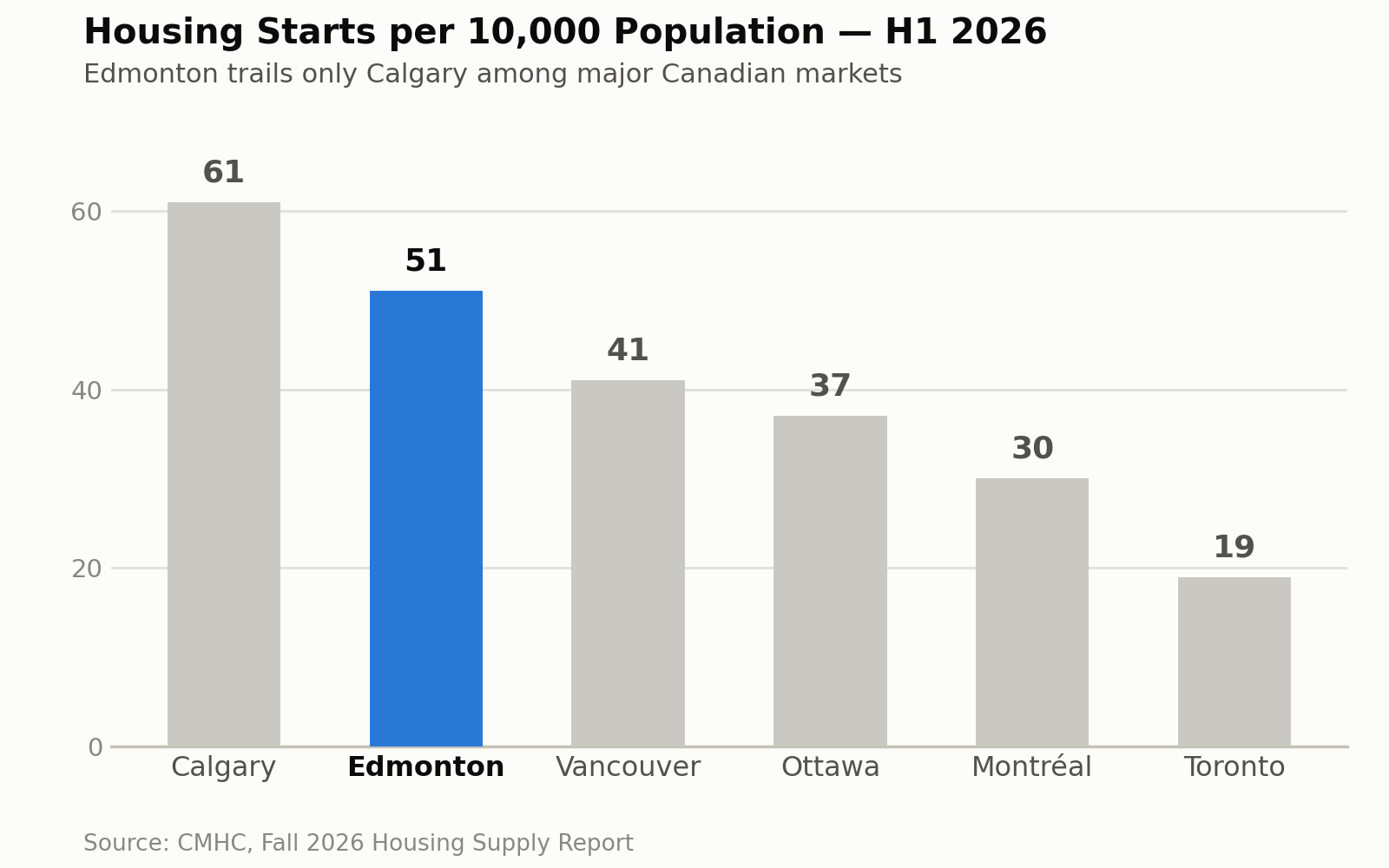
The supply came from building that started years ago. Edmonton had 21,337 housing starts in 2025, and CMHC counted 18,544 homes under construction in the Edmonton area in August 2026.

I see it in my own MLS® searches for new family homes around Edmonton this week. New-construction inventory is sitting at about 7 to 9 months in Leduc, Fort Saskatchewan and Spruce Grove, while resale family homes in those same places are at 1 to 3 months. That gap is about how many homes builders have finished. It has nothing to do with the vote. I explain how to use it in new construction vs. resale.

2. Interest rates

The Bank of Canada's policy rate is 2.25%. It held there on September 2, and its next decision is October 28, 2026, nine days after the vote. The Bank sets rates for the whole country no matter how Alberta votes.

3. How many people are moving here

The Edmonton area grew 3.0% in the year to July 1, 2025, the fastest of any metropolitan area in Canada, with the largest gain from other provinces. Growth has cooled since: Alberta's population was up 1.5% in the year to July 1, 2026. That is still the fastest of any province, and people moving from other provinces have added to Alberta for 20 quarters in a row. The slowdown came mostly from lower federal targets for temporary residents.

Is Edmonton different from Calgary?

A few things are different here:

  • Prices are lower. Edmonton's benchmark price in September was $423,100. Calgary's was $566,700. That is about $143,600, or 25%, less.

  • Prices are holding. Edmonton's benchmark was down 0.3% from a year earlier and Calgary's about 1%. In August, Greater Toronto was down about 4.5% and Metro Vancouver about 5.6%.

  • Affordability is the draw. RBC estimates that owning a home in Edmonton took about 37% of a typical household's income in early 2026, compared with 53% nationally.

  • Support for staying is higher here than in the province overall, as the polling above shows.

So is there any real risk to home values?

Yes, and I'd be doing you a disservice to say otherwise. It just isn't a next-morning risk.

The risk is confidence. If businesses hold back on hiring or expanding, fewer people move here, and people are the slowest of the three drivers to show up in prices and the biggest. Business groups have said so. The head of the Edmonton Chamber of Commerce said in June that the debate is "chilling the brand", and Edmonton's mayor has said it creates "severe economic uncertainty". A Calgary Chamber survey of 137 members in June found 80% saying the debate was hurting Alberta's economy. University of Calgary economist Trevor Tombe estimated that a shock to confidence like the recent trade dispute could cost about 50,000 jobs, and he said himself to take that number with "several grains of salt".

Supporters of independence make the opposite case, that Alberta would be better off financially, and the frustrations behind the vote are real and long-standing. I'm not here to settle that.

What I can tell you is what the numbers show so far. I haven't found a source that has measured any effect of the referendum on Edmonton home prices or sales. Anyone telling you it has already moved prices, in either direction, is guessing.

Should you buy or sell before the vote, or wait?

Make the decision on your own plan, not on the ballot.

  • Buying a resale home: good family homes in many areas still sell in a few weeks. Waiting for a vote result doesn't change that.

  • Buying new construction: builders with finished homes are already negotiating on upgrades, closing costs or price. That leverage comes from inventory, and it's there this month.

  • Selling: you are competing with more listings than a year ago, so price and presentation matter more than timing the vote.

I also list homes for some builders. If you're interested in one of them, I'll tell you up front and explain how representation works.

Get my free New-Construction Buyer Checklist

If a new build is on your list this fall, the checklist walks you from your first show home visit to your one-year warranty.

Get the free checklist →

Frequently asked questions

When is the Alberta referendum?

Monday, October 19, 2026. Polls are open 9 a.m. to 8 p.m., and advance voting runs October 13 to 17.

Does the referendum separate Alberta from Canada?

No. All ten questions are non-binding. Question 10 asks whether Alberta should remain a province or whether the government should start the legal process toward a future binding referendum on separation.

Will my mortgage or rate hold change after the vote?

The vote doesn't change your mortgage contract. Rates follow the Bank of Canada and the bond market. If you have an approval, ask your mortgage broker directly whether anything has changed.

Has the referendum lowered Edmonton home prices?

There's no evidence of that so far. In September 2026 the average Edmonton-area price was $466,080, up 2.9% from a year earlier, and the benchmark price was down 0.3%. The market has softened because there are more homes for sale.

What matters more to Edmonton home values than the vote?

Supply, interest rates and migration. Inventory is up 16.7% from a year ago, the Bank of Canada rate is 2.25%, and population growth has slowed from its 2025 pace.

Thinking about a move this fall?

Text me first at 780-220-8449, or book a 20-minute call. I'll pull the current numbers for your neighbourhood and price range so you can decide on facts. No pressure. I work with buyers and sellers in Edmonton, Sherwood Park, Fort Saskatchewan, Devon, Spruce Grove, Stony Plain, St. Albert, Leduc and Beaumont.

Jay Lewis | REALTOR® | RE/MAX Excellence

Sources:Elections Alberta: 2026 referendum · Government of Alberta: Premier's address · Supreme Court of Canada: Reference re Secession of Quebec · Clarity Act · Angus Reid Institute, August 2026 · REALTORS® Association of Edmonton, September 2026 · CMHC housing starts, August 2026 · Statistics Canada: population of metropolitan areas · Statistics Canada: population estimates, July 1, 2026 · Bank of Canada, September 2, 2026 · RBC Economics: Housing Affordability, June 2026 · Calgary Real Estate Board, September 2026 · Ipsos poll, September 2026 (Global News) · Trevor Tombe, The Hub, February 2026

Want to see more Edmonton real-estate updates from JaySells.ca in Google? Add JaySells.ca as a Preferred Source.
This article is general information, not legal, tax, mortgage or political advice. Poll results and market statistics are estimates that change often with market conditions and world events. Home prices are averages and benchmarks, not a valuation of your home.

Read

What Happens at a New Home Walkthrough in Alberta?

Short answer: The pre-possession walkthrough is your inspection of the finished home with the builder's representative, usually shortly before you get your keys. You go room by room, test what works, and write down every deficiency, from paint touch-ups to doors that don't close properly, on the builder's form. That written list is what the builder commits to fix, so take your time and don't sign until everything you found is on it.

By Jay Lewis, REALTOR® | RE/MAX Excellence · Updated October 2, 2026

This article is part of my Edmonton New Construction Buyer’s Guide.

Free download: my New-Construction Buyer Checklist. Two printable pages, from your first show home visit to your one-year warranty, including what to track after your walkthrough.

I've worked in new construction for more than 25 years, on the trades side (framing new homes, renovations and full contract builds around Edmonton) and the sales side. I've been on both sides of the walkthrough, so I know what builders expect to hear and what buyers tend to miss. Here's how to get the most out of it.

What is a pre-possession walkthrough?

Builders call it a pre-possession walkthrough, PDI (pre-delivery inspection) or orientation. It usually happens once the home is complete and cleaned, shortly before possession. The builder's representative shows you how the home works, and together you record any deficiencies on a form. You typically sign that list, and the builder uses it to schedule repairs.

How long does a new home walkthrough take?

Plan on one to two hours for a typical house, and longer for a larger home. Book it for daylight if you can: marks on walls, floors and cabinets are much easier to see in natural light. Ask the builder how long they've scheduled, and don't let the clock rush you.

What should I bring to the walkthrough?

  • Your purchase agreement, signed selection sheets and any change orders

  • Blue painter's tape to mark spots as you find them

  • Your phone for photos, and a small flashlight

  • A phone charger or small plug-in tester to check outlets

  • A tape measure, if any dimensions matter to you

  • Your REALTOR®, if they attend walkthroughs (I do)

What should I check at the walkthrough, room by room?

Everywhere

  • Walls and ceilings: drywall cracks, nail pops, dents and paint coverage

  • Floors: scratches, chips, gaps, squeaks and transitions between rooms

  • Doors: they open, close and latch without rubbing, and the hardware is tight

  • Windows: they open, close and lock; screens are there; glass isn't scratched

  • Trim and caulking: gaps, missing pieces and messy caulk lines

  • Lights, switches and outlets all work

Kitchen and bathrooms

  • Cabinets and drawers open, close and line up; no chips or scratches

  • Countertops are undamaged and sealed where they meet the backsplash

  • Taps run hot and cold, drains drain, toilets flush and don't rock

  • Appliances are the models on your selection sheets and work

  • Exhaust fans run

Mechanical room in a new home basement with furnace, hot water tank and ductwork

Illustrative image.

Mechanical and basement

  • Furnace, hot water tank and any air conditioning are installed and the builder shows you how they work

  • Ask where the main water shut-off and electrical panel are

  • Look for signs of water on the basement floor and around the foundation walls

Exterior

  • Siding, stone and trim are complete and undamaged

  • Grading slopes away from the house, and downspouts discharge away from the foundation

  • Driveway, walkways and steps are complete; note any unfinished exterior work and the date it will be done

  • Garage door opens, closes and reverses safely

Should I compare the home to my selection sheets?

Yes. Check that the flooring, cabinets, countertops, fixtures and upgrades match what you chose and paid for. Mix-ups happen, and it's far easier to fix them before you move in than after.

What if I find a lot of deficiencies?

That's normal, and it's the reason the walkthrough exists. Put every item on the builder's form, be specific about the location, and take a photo of each one. Before you sign, ask:

  • When will each item be fixed?

  • Who do I contact to follow up?

  • How do I report problems that show up after I move in?

If something serious is unfinished, such as missing safety items or systems that don't work, talk to your lawyer before possession about how it's handled under your purchase agreement.

Should I hire a home inspector for a new build?

You can, and many buyers do. A licensed home inspector looks at things most buyers don't know to check. The best times are before drywall, while framing and rough-ins are still visible, and before your walkthrough. Ask the builder about site access rules first.

What does the Alberta new home warranty cover after the walkthrough?

Every new home in Alberta must have warranty coverage of at least:

  • 1 year: labour and materials

  • 2 years: delivery and distribution systems (electrical, plumbing, heating and air)

  • 5 years: building envelope

  • 10 years: major structural components

Coverage on a house, duplex or townhome starts at the earliest of first occupancy, the date the municipality or its accredited inspection agency grants permission to occupy, or the date your title transfer is registered. For a condo, it’s the earlier of first occupancy and permission to occupy. That means it can start before you get your keys, so ask the builder for the exact start date. Keep your walkthrough list, photos and warranty documents together, and report new issues in writing. Book your own check of the home well before the one-year mark so nothing covered is missed.

Get my free New-Construction Buyer Checklist

The walkthrough is one step of many. My free, printable checklist covers everything from your first show home visit to your one-year warranty.

Get the free checklist →

Frequently asked questions

When does the pre-possession walkthrough happen?

Usually once the home is complete and cleaned, shortly before possession. Your builder will schedule it.

Can I bring someone to my new home walkthrough?

Usually, yes. Many buyers bring their REALTOR® or a family member. Check the builder's policy, especially for home inspectors.

What happens if the builder doesn't fix the deficiencies?

Follow up in writing with the builder first. Covered defects can be reported to your warranty provider under Alberta's new home warranty.

Should I sign the walkthrough form if items are still unfinished?

Only once every item you found is written on it. Signing usually confirms the list, not that the work is done.

Is a walkthrough the same as a home inspection?

No. The walkthrough is with the builder's representative; a home inspection is done by a licensed, independent inspector you hire.

Want a second set of eyes at your walkthrough?

If you're buying a new home in Edmonton, Sherwood Park, Fort Saskatchewan, Devon, Spruce Grove or Stony Plain, text me first at 780-220-8449, or book a 20-minute call. I attend walkthroughs with my buyers and help document deficiencies. I also list homes for some builders; if you're interested in one of my listings, I'll tell you up front and explain how representation works. I'm not a home inspector, engineer or lawyer, and I'll tell you when you need one.

Jay Lewis | REALTOR® | RE/MAX Excellence

Sources: Government of Alberta: new home warranty · Alberta New Home Warranty Program: when coverage starts

This article is general information, not legal or inspection advice.

Want to see more Edmonton real-estate updates from JaySells.ca in Google? Add JaySells.ca as a Preferred Source.

Read

What Is a Quick Possession Home in Edmonton?

Short answer: A quick possession home is a new home the builder has already built or nearly finished, so you can usually move in within about 30 to 90 days instead of waiting 7 to 12 months for a new build. You trade most design choices for speed and a firm price. Before you buy one, check what's included, when the warranty actually started, and whether there's room to negotiate.

By Jay Lewis, REALTOR® | RE/MAX Excellence · Updated September 30, 2026

This article is part of my Edmonton New Construction Buyer’s Guide.

Free download: my New-Construction Buyer Checklist. Two printable pages, from your first show home visit to your one-year warranty, including what to confirm before you buy a quick possession home.

I've worked in new construction for more than 25 years, on the trades side (framing new homes, renovations and full contract builds around Edmonton) and the sales side. Quick possession homes can be a great option, but because they're already built, you have to look at them differently from a home you're about to order. Here's how I walk buyers through them.

What is a quick possession home?

Builders use a few names for the same idea: quick possession, move-in ready, inventory home or spec home. The builder started the home before it sold, chose the floor plan and finishes, and is now finishing or has finished construction. Some are brand new and have never been lived in; some are former show homes.

  • Complete: ready now. Possession is mostly the time for financing, your lawyer and the walkthrough.

  • Nearly complete: in the final stages, often with a set possession date in the coming weeks or months.

  • Former show home: usually full of upgrades and sometimes sold with furniture or on a lease-back. Terms vary a lot, so read them carefully.

How fast can I move into a quick possession home in Edmonton?

If the home is complete, possession can often happen in about 30 to 60 days, depending on your financing and the builder's process. If it's nearly finished, it depends on the construction schedule. Either way, get the possession date in writing in the purchase agreement.

For comparison, a new home that hasn't started usually takes about 7 to 12 months from signing to keys. See how long it takes to build a house in Edmonton.

What are the pros and cons of a quick possession home?

Pros

  • Speed: you can match your move to a sale, lease end or job start.

  • What you see is what you get: no guessing from a show home and a colour board.

  • Price certainty: the finishes are already in the price, so there are no surprise design-centre totals.

  • Sometimes more room to negotiate: builders carry costs on finished homes, and some offer incentives to move them. It depends on the builder and the market.

Cons

  • Few or no choices: the layout, lot and finishes are set.

  • Paying for upgrades you might not have picked: especially in former show homes.

  • Less time to plan: financing, your lawyer's review and your move all happen quickly.

  • Warranty timing: part of the warranty may already have been used up (see below).

When does the warranty start on a quick possession home?

This is the question I make sure every buyer asks. Under Alberta’s new home warranty rules, coverage on a house, duplex or townhome starts on the earliest of three dates: when the home is first occupied, when the municipality or its accredited inspection agency grants permission to occupy, or when the transfer of title to the buyer is registered. For a condo, it’s the earlier of first occupancy and permission to occupy.

That means the warranty can start before you own the home. If a finished home received permission to occupy months before you buy it, some of the 1-year labour and materials coverage may already be used up. That isn’t a reason to avoid a quick possession home, just a detail to confirm: ask the builder, in writing, for the warranty start date and the warranty provider before you firm up. Alberta’s minimum coverage is:

  • 1 year: labour and materials

  • 2 years: delivery and distribution systems (electrical, plumbing, heating and air)

  • 5 years: building envelope

  • 10 years: major structural components

What should I check before buying a quick possession home?

  1. What's included: appliances, window coverings, landscaping, fencing, the driveway and air conditioning. Get the list in writing.

  2. The all-in price: whether GST is included and whether a GST rebate has been assumed. Eligible first-time buyers may qualify for significant GST relief on a new home; see my 2026 Alberta new-home GST rebate guide.

  3. The warranty start date and provider, as above.

  4. The lot: orientation, grading and drainage, and what's planned next door. See my builder contract checklist for what to confirm in the agreement.

  5. Condition: a finished home can still have deficiencies. A licensed home inspector can look at it before possession, and you should still do a full pre-possession walkthrough.

  6. For former show homes: wear and tear, what furniture or decor is included, and any lease-back terms.

Can I negotiate on a quick possession home?

Often, but not always. Depending on the builder and the market, room to negotiate may show up as a price reduction, upgrades, help with closing costs, or appliances and landscaping included. Prices and incentives change often with market conditions and world events, so treat any incentive as a snapshot. Having your own REALTOR® helps here: I compare what's being offered across builders so you know whether a deal is actually a deal.

Finished new two-storey home on a street of newer homes

Illustrative image.

Where can I find quick possession homes around Edmonton?

Most active builders have some, and the list changes month to month. My area guides cover the communities where new homes are being built, including Spruce Grove, Sherwood Park, Fort Saskatchewan and Stony Plain. Text me what you're looking for and I'll send you what's available now.

Get my free New-Construction Buyer Checklist

Everything to check before you buy a new home, including a quick possession, on two printable pages, from your first show home visit to your one-year warranty.

Get the free checklist →

Frequently asked questions

What does quick possession mean?

It means the home is already built or nearly finished, so you can take possession soon after buying, often within about 30 to 90 days.

Is a quick possession home cheaper?

Not automatically. It may include upgrades you wouldn't have chosen, but builders sometimes offer incentives on finished homes. Compare the all-in price with a similar home you'd build.

Do quick possession homes come with a warranty?

Yes. New homes in Alberta need warranty coverage, but it starts at the earliest of first occupancy, permission to occupy or registered title transfer (for condos, occupancy or permission to occupy). Ask for the start date before you buy.

Can I still choose finishes on a quick possession home?

Usually not, although a home in the earlier stages of construction may still allow a few choices. Ask the builder what's still open.

Do I need my own REALTOR® for a quick possession home?

It isn't required, but the show home staff represent the builder. See Do I need a REALTOR® for a new build?

Looking for a home you can move into soon?

If you're weighing quick possession homes in Edmonton, Sherwood Park, Fort Saskatchewan, Devon, Spruce Grove or Stony Plain, text me first at 780-220-8449, or book a 20-minute call. I also list homes for some builders; if you're interested in one of my listings, I'll tell you up front and explain how representation works. I'm not a home inspector, engineer or lawyer, and I'll tell you when you need one.

Jay Lewis | REALTOR® | RE/MAX Excellence

Sources: Government of Alberta: new home warranty · Alberta New Home Warranty Program: when coverage starts · Canada Revenue Agency: First-Time Home Buyers’ GST/HST rebate

This article is general information, not legal, tax or mortgage advice. Confirm details in your purchase agreement and with the appropriate professionals.

Want to see more Edmonton real-estate updates from JaySells.ca in Google? Add JaySells.ca as a Preferred Source.

Read

How Long Does It Take to Build a House in Edmonton?

Short answer: Building a new production home in Edmonton usually takes about 7 to 12 months from signing the purchase agreement to getting your keys, depending on the builder, the home and the season. A fully custom home often takes a year or longer, plus design time before construction starts. If you need to move sooner, a quick possession home that's already built or nearly finished can close in roughly 30 to 60 days.

By Jay Lewis, REALTOR® | RE/MAX Excellence · Updated September 28, 2026

This article is part of my Edmonton New Construction Buyer’s Guide.

Free download: my New-Construction Buyer Checklist. Two printable pages, from your first show home visit to your one-year warranty, including what to confirm about possession dates before you sign.

I've worked in new construction for more than 25 years, on the trades side (framing new homes, renovations and full contract builds around Edmonton) and the sales side. I've seen schedules from the job site side, so I know where the time really goes and which delays are normal. Here's how long each stage usually takes, what can push your possession date, and how to plan around it.

How long does each type of new home take to build in Edmonton?

  • Quick possession (already built or nearly finished): about 30 to 60 days, mostly the time for financing, your lawyer and the walkthrough.

  • Under construction when you buy: anywhere from a few weeks to several months, depending on how far along it is. Your selection options shrink the further along it is.

  • Production home on a lot that hasn't started: about 7 to 12 months from signing to keys. One Edmonton builder describes its rule of thumb as nine to twelve months.

  • Custom home: often a year or longer for construction, plus several months of design, drawings and permits before work starts.

These are typical ranges, not promises. Your purchase agreement, not the show home conversation, sets the possession date and how it can change.

What happens during the build, and how long does each stage take?

Every builder's schedule is a bit different, but one Edmonton builder publishes a typical timeline that matches what I've seen on site. Counting back from possession day:

  • Pre-construction (about 7 months before possession): purchase agreement, design-centre selections, final drawings and permits.

  • Foundation (about 5 months before): excavation, footings, basement walls, backfill.

  • Framing (about 4 months before): walls, floors, roof trusses and sheathing, windows and exterior doors. The house gets its shape quickly here.

  • Rough-ins and insulation (about 3 months before): plumbing, electrical and heating rough-ins, then insulation and vapour barrier.

  • Drywall, texture and paint (about 2 months before): followed by cabinets, flooring, fixtures and finishing.

  • Final clean and walkthrough (about 3 weeks before): final inspections, cleaning and your pre-possession walkthrough.

Inside a new home before drywall, showing wood stud walls, insulation, wiring and plumbing rough-ins

Illustrative image.

The stage I pay closest attention to for buyers is before drywall. Once the walls are closed, framing, insulation and rough-ins are hidden. If you want an independent inspection by a licensed home inspector, that's the best time to arrange it.

How long do building permits take in Edmonton?

For most production homes, the builder handles permits as part of pre-construction, so you won't deal with them directly. The City of Edmonton publishes its current development and building permit processing times, and they change through the year. On a custom build, permits and drawings can add weeks to the start of construction, so ask your builder to include them in the schedule they give you.

What can delay a new build in Edmonton?

  • Weather: excavation, concrete and exterior work are slower in deep cold, and spring thaw can make lots muddy. A home started in late fall may take longer than one started in spring.

  • Selections running late: most builders set deadlines for design-centre choices. Late or changed selections can push the schedule.

  • Materials and trades: supply problems or trade shortages in a busy season can add weeks.

  • Inspections and utilities: each stage needs inspections, and services such as power and gas have to be connected before possession.

  • Community readiness: in a brand-new phase, roads, utilities and grading around your lot need to be ready too.

Construction prices and schedules change often with market conditions and world events, so treat any timeline as an estimate until it's in writing.

Is the possession date in a builder contract guaranteed?

Not always. Many builder contracts give an estimated possession date and allow the builder to extend it for reasons listed in the agreement, with a notice period. Before you sign, check:

  • Whether the date is firm or estimated

  • How much notice the builder must give if it changes

  • Whether there's a maximum extension

  • What happens to your deposit if the delay is long

Have an Alberta real estate lawyer review the agreement before it becomes firm. My Alberta builder contract checklist covers what to look for.

How do I plan my move around a new build timeline?

  • Selling your current home: avoid locking in a firm sale date until your builder's possession date is confirmed. A flexible possession on your sale, or a short overlap, can save you from paying for storage and a hotel.

  • Renting: check your lease notice period and whether you can go month to month near the end.

  • Mortgage rate hold: a long build can outlast a standard rate hold. Ask your lender about completion mortgages and how long they can hold a rate.

  • GST rebate: timing rules apply to the new First-Time Home Buyers' GST rebate. See my 2026 Alberta new-home GST rebate guide.

  • Need to move sooner? Ask about quick possession homes. Builders in many communities, including those in my Spruce Grove and Sherwood Park guides, regularly have completed or nearly completed homes.

What are the steps to buying a new build, in order?

  1. Get pre-approved and set an all-in budget, including GST, upgrades and closing costs.

  2. Text your REALTOR® before your first show home visit. Many builders have registration policies, and some won't recognize an agent you bring in later.

  3. Visit show homes and compare builders on their included specifications, not the show home finishes.

  4. Choose the lot: orientation, grading, lot type and what's planned next door.

  5. Review the purchase agreement with your lawyer before it becomes firm.

  6. Make your design-centre selections before the builder's deadlines.

  7. Construction: stay in touch with your builder and consider an inspection before drywall.

  8. Pre-possession walkthrough: document every deficiency in writing.

  9. Possession: your lawyer completes the purchase and you get your keys. Your Alberta new home warranty starts.

More detail: show home sales rep vs. buyer's agent · which upgrades are worth it.

Get my free New-Construction Buyer Checklist

Want every step above, plus what to check in the contract and during the build, on two printable pages? My free checklist takes you from your first show home visit to your one-year warranty.

Get the free checklist →

Frequently asked questions

How long does it take to build a house in Edmonton?

Usually about 7 to 12 months from signing to possession for a production home, and a year or longer for a custom home. Quick possession homes can close in about 30 to 60 days.

Can I build a house faster in summer?

Often, yes. Excavation, concrete and exterior work go more smoothly in warm weather. A home started in late fall is more likely to see weather delays.

What is a quick possession home?

A new home the builder has already built or nearly finished, often called a spec home. Selections are mostly made, but you can move in much sooner.

Can a builder change my possession date?

Many builder contracts allow it for reasons listed in the agreement, with notice. Check the possession and extension terms with your lawyer before you sign.

When should I get an inspection on a new build?

The most useful time is before drywall, when framing, insulation and rough-ins are still visible, plus before your pre-possession walkthrough.

Planning a new build in the Edmonton area?

If you're working out timing for a new home in Edmonton, Sherwood Park, Fort Saskatchewan, Devon, Spruce Grove or Stony Plain, text me first at 780-220-8449, or book a 20-minute call. I'll help you compare quick possessions with homes still to be built, and plan the timing around your current home. I also list homes for some builders; if you're interested in one of my listings, I'll tell you up front and explain how representation works. I'm not a home inspector, engineer or lawyer, and I'll tell you when you need one.

Jay Lewis | REALTOR® | RE/MAX Excellence

Sources:Sterling Homes Edmonton: How long does it take to build a new home? · City of Edmonton: permit processing times · Government of Alberta: new home warranty

This article is general information, not legal or mortgage advice. Timelines vary by builder, home and season; confirm dates in your purchase agreement.

Want to see more Edmonton real-estate updates from JaySells.ca in Google? Add JaySells.ca as a Preferred Source.
Read

Which New Home Upgrades Are Worth It? A Construction-Informed Guide for Edmonton Buyers

Short answer: Prioritize upgrades that improve how you use the home, provide a measurable benefit over the builder’s included specifications, and would be difficult or disruptive to add later. Layout changes, useful rough-ins and well-designed energy-performance improvements deserve early attention. Decorative fixtures and finishes can wait when the standard choices already meet your needs.

This article is part of my Edmonton New Construction Buyer’s Guide.

Free download: my New-Construction Buyer Checklist. Two printable pages, from your first show home visit to your one-year warranty, including what to confirm about upgrades and selections.

Correct installation, required drainage, appropriate mechanical design and code compliance are baseline expectations. Buyers should not have to select an upgrade package to obtain properly completed work.

If you are choosing builder options in Edmonton, Sherwood Park, Fort Saskatchewan, Devon, Spruce Grove or Stony Plain, begin with the included specifications and your total budget. An upgrade is worth considering because of the difference it makes to your home, not simply because it appears in a premium package.

By Jay Lewis, REALTOR® | RE/MAX Excellence
Reviewed September 21, 2026


How do I decide whether a builder upgrade is worth the price?

My approach is to evaluate each option against four questions:

  1. What is already included? Identify the standard product, specification or layout before paying to change it.

  2. What does the upgrade improve? Look for a specific benefit in comfort, function, durability or appearance.

  3. What would changing it later involve? Consider demolition, access, replacement work and disruption as well as the product price.

  4. Will you use the benefit? A feature can be valuable to one household and unnecessary for another.

A higher purchase price does not guarantee lower operating costs or a matching increase in resale value. Decide whether you are paying for everyday enjoyment, future flexibility or a measurable performance improvement.

Upgrade categoryWhen it deserves a close lookWhat to confirm
Layout and structural optionsThe standard plan does not fit a lasting needApproved design, total price and selection deadline
Electrical and plumbing rough-insYou have a realistic future useLocations, capacity, included work and later completion costs
Insulation and air sealingThe package improves the included assemblyWritten specifications, performance targets and testing
WindowsThe proposed product offers useful performance improvementsWhole-window ratings, orientation and installation details
Heating, cooling and ventilationAdded features address a defined comfort needDesign basis, equipment, controls and commissioning
Cabinets and flooringThe standard option falls short in function or durabilityConstruction, material limits, layout and replacement implications
Decorative fixtures and finishesYou value the appearance and have room in the budgetUpgrade premium and practical alternatives

This is a decision framework, not a ranking of guaranteed financial returns.


What should already be included before I pay for upgrades?

Proper construction is the starting point. A home must meet the requirements applicable to its construction. Alberta publishes its building codes and standards, which should be distinguished from optional features or higher performance targets.

That distinction matters when discussing window installation, bathroom water protection, drainage and mechanical design. Ask the builder to explain what the base specification provides and exactly how a proposed upgrade differs.

For example, a higher-performance window is a product choice. Correctly installing the selected window is part of completing the work properly. Similarly, a custom shower is an option; the required water-management details for that shower are part of its construction.

Warranty coverage is a separate consideration. Review the applicable warranty documents and reporting procedures. Alberta’s new-home warranty overview explains minimum coverage and relevant conditions. An upgrade description should not substitute for a clear specification or warranty information.


Before You Visit or Register With a Builder

If you want your own representation, text me at 780-220-8449 before visiting a show home, registering online or beginning direct negotiations. Builder cooperation and registration policies vary, and some require your REALTOR® to be identified at the first visit.


Which upgrades should I decide on before construction starts?

Layout and Structural Options

Prioritize changes that solve a lasting problem. A garage configuration, doorway location, window opening or room layout may be difficult to change once the home is built. If the standard plan does not accommodate your vehicle, furniture, mobility needs or intended use, investigate that before choosing finish packages.

Ask which changes the builder offers, what design or engineering work they require, and when decisions become final. Approval requirements and feasibility depend on the property and proposed change. Adding square footage or complexity should be a deliberate budget decision.

Wood-framed interior of a new home under construction with electrical wiring and boxes installed

Electrical, Data and Plumbing Rough-Ins

Plan around a realistic future use. Potential items include a conduit route for future wiring, outlets positioned for your furniture, an EV-charging plan, or plumbing rough-ins aligned with a future basement layout.

“EV-ready” and “basement rough-in” can describe different scopes. Ask whether the price covers a pathway, wiring, a circuit, equipment, or only some of those components. Have the relevant trade assess capacity and suitability rather than assuming spare panel spaces establish available electrical capacity.

Before committing, request a marked plan and written scope. A rough-in has limited value if its location does not suit the room you eventually intend to build.

Insulation and Air Sealing

Look for an improvement you can define. The building envelope, the assemblies separating indoors from outdoors, works as a system. Ask which parts of that system change, how the improvement will be assessed, and how ventilation is addressed alongside airtightness.

A blower-door test measures air leakage; it does not measure insulation quality by itself. Natural Resources Canada’s EnerGuide glossary explains the test and related terms.

Request the included and proposed insulation specifications, any airtightness target and the testing process. Where energy savings are part of the sales claim, ask for a home-specific assessment and its assumptions. “Extra insulation” alone is not enough information to establish value.

Window Performance

Compare the actual window, rather than the package name. Natural Resources Canada identifies U-factor as a measure of heat loss through a window assembly; a lower value indicates less heat loss. Solar heat gain also matters, with suitability affected by orientation, shading and the home’s design. Source: NRCan’s guide to windows and exterior doors.

Ask for the exact standard and upgraded products and their whole-window ratings. If the standard specification already performs well, the next step up needs to justify its price. More glazing or a premium appearance is not automatically a comfort improvement.

Heating, Cooling and Ventilation

Correct sizing belongs in the base design. An upgrade discussion should focus on what additional equipment or features achieve, rather than treating a larger system as inherently better.

Ask how the design accounts for the selected layout, windows and insulation. NRCan’s heat-pump guidance specifically emphasizes accounting for building-envelope improvements when assessing heating needs to avoid oversizing.

For an air-conditioning package, request the equipment details, installation scope and explanation of sizing. For comfort concerns in particular rooms, ask the mechanical designer how distribution and controls address those rooms. A thermostat upgrade alone does not establish that a room-level comfort problem has been solved.


How should I compare flooring, cabinet and garage options?

Flooring for Entries and Busy Rooms

Choose for the household using it. Wet footwear, pets, children and cleaning habits belong in the decision. Compare the actual product’s maintenance instructions, moisture limitations, scratch resistance and installation requirements.

Hard flooring is not one uniform category: tile, wood, laminate and vinyl have different characteristics. Carpet can be a practical choice where warmth and comfort are priorities. Avoid paying for a premium label without understanding what changes in the product.

Finished new-home kitchen with a wood island, quartz countertops and pantry storage

Kitchen Cabinets and Storage

Treat layout and cabinet construction as lasting decisions. Handles and pulls can be relatively straightforward to change, but cabinet boxes, layout, countertop relationships and appliance openings are more involved. Refacing is not always practical or inexpensive.

Evaluate useful drawers, pantry access, clearances and storage before choosing a decorative door profile. You may reasonably prioritize a kitchen feature you will use every day, even if it does not improve energy performance.

For countertops, compare the actual materials, care requirements and price difference. Neither granite nor quartz is automatically the better purchase for every household.

Garage Doors and Future Heating

Assess the garage as a whole. An insulated door deserves a different evaluation in a garage intended to be heated than in one used only for parking. Ask about the door assembly, seals, surrounding construction and the intended heating plan rather than relying on one insulation number.

If you are considering a future heater, request a written explanation of what any preparation includes. Have the relevant professionals confirm the installation requirements. Do not assume that selecting an insulated door makes the entire garage ready for heating.


Which builder upgrades can wait until after possession?

Decorative lighting. If the wiring, switching, support and locations already suit the plan, the fixture style can be a later decision. Confirm any special requirements before postponing a selection.

Premium paint and feature treatments. These can offer personal enjoyment, but they do not need to take priority over a layout problem or a useful rough-in. Consider how much repainting or finish work you are actually willing to arrange after possession.

Hardware and accessories. Compare the builder’s upgrade charge with the complete cost of an alternative, including installation and any standard items you would discard.

Deferring an upgrade does not automatically save money. Paying the builder once can be preferable to paying for a standard product and replacing it shortly afterward. Compare both paths before deciding.


What should I bring to a builder options meeting?

Start with the floor plan, included specifications and a firm allowance for optional changes. Keep a separate allowance for work and purchases needed after possession.

For each option, record:

  • The standard item and proposed replacement

  • The complete price, including applicable taxes and related work

  • The product, model, dimensions or performance specification

  • The selection deadline and later change charges

  • Who completes the work and what remains excluded

Finish by reviewing the combined total. Several individually affordable selections can add up to more than the budget allows. Confirm the selections in the builder’s written change process, and direct contract questions to your lawyer before becoming firm.

If you want a second set of eyes on a builder’s options package before committing to selections, call or text me at 780-220-8449. Have the floor plan, included specifications and upgrade pricing ready so we can compare what each option adds to your home and budget.


My Take as a Local REALTOR®

After more than 25 years in new construction, on the trades side through Konstruct (framing, renovations and full contract builds) and the sales side, I look at an options sheet in terms of what the change accomplishes and what replacing it later would involve.

I would rather see a buyer make a few deliberate decisions than purchase a package without understanding its contents. A well-positioned rough-in may support a future plan. A cabinet change may make daily life easier. A window package may improve performance. Each needs a reason that fits the home and the buyer.

My role is to help compare the specifications, costs and practical trade-offs. Technical design, code interpretation and inspections remain the responsibility of the appropriate professionals.

If you are still deciding between a new build and an existing home, my Edmonton new-construction versus resale guide explains how to compare the overall purchase.


Get the New-Construction Buyer Checklist

Choosing upgrades for a new home in Edmonton or the surrounding area? Get my free new-construction buyer checklist, and text me for help comparing your builder’s included specifications, upgrade options and total budget.

If you are still deciding between new construction and resale, I can also help you compare what your budget can buy in both markets.

Call or text me: 780-220-8449
Email: jay@jaysells.ca
Website: jaysells.ca

Your search. Your timeline. No pressure.


Related guides: New construction cost per square foot in Edmonton · Alberta builder contract checklist · Do I need a REALTOR® to buy a new build?

Frequently Asked Questions

Which upgrades add the most resale value?

There is no universal ranking that guarantees a return. Buyer preferences, location, property type and market conditions affect value. Choose upgrades for their documented benefits and your expected use; do not assume the resale price will increase by the amount spent.

Should I pay for triple-pane windows?

Compare the builder’s included windows with the proposed upgrade first. Ask for whole-window performance ratings, the price difference and how the selection suits the home’s orientation. Pane count alone does not establish whether the additional cost is worthwhile.

Is it cheaper to install air conditioning after possession?

It depends on the builder’s price, the proposed equipment and the later installation requirements. Obtain comparable written scopes and have sizing confirmed. Include any preparation already offered by the builder when comparing costs.

Should I finish the basement with the builder or later?

Compare the complete scope, cost, timing and disruption of each option. If you plan to wait, settle the intended layout before selecting rough-ins. Preparation for a future basement does not necessarily include everything required to complete it.

Can I negotiate an upgrade package?

Ask what flexibility the builder offers on the specific home and selections. Evaluate a credit against actual option prices and the items you want. A large promotional allowance has less personal value if it applies primarily to features you would not otherwise purchase.


Sources and Important Information

The sources support the technical background; the upgrade priorities and comparison approach are my professional perspective. This article provides general education, not a property-specific design, inspection or guarantee of savings. Confirm specifications, warranties, inclusions and technical requirements with the builder and qualified professionals.

If you're comparing your options or planning a move in Edmonton, Sherwood Park, Fort Saskatchewan, Devon, Spruce Grove or Stony Plain, I can help you understand how the details fit into the bigger picture.

Call or text me at 780-220-8449

Jay Lewis | REALTOR® | RE/MAX Excellence

Want to see more Edmonton real-estate updates from JaySells.ca in Google? Add JaySells.ca as a Preferred Source.
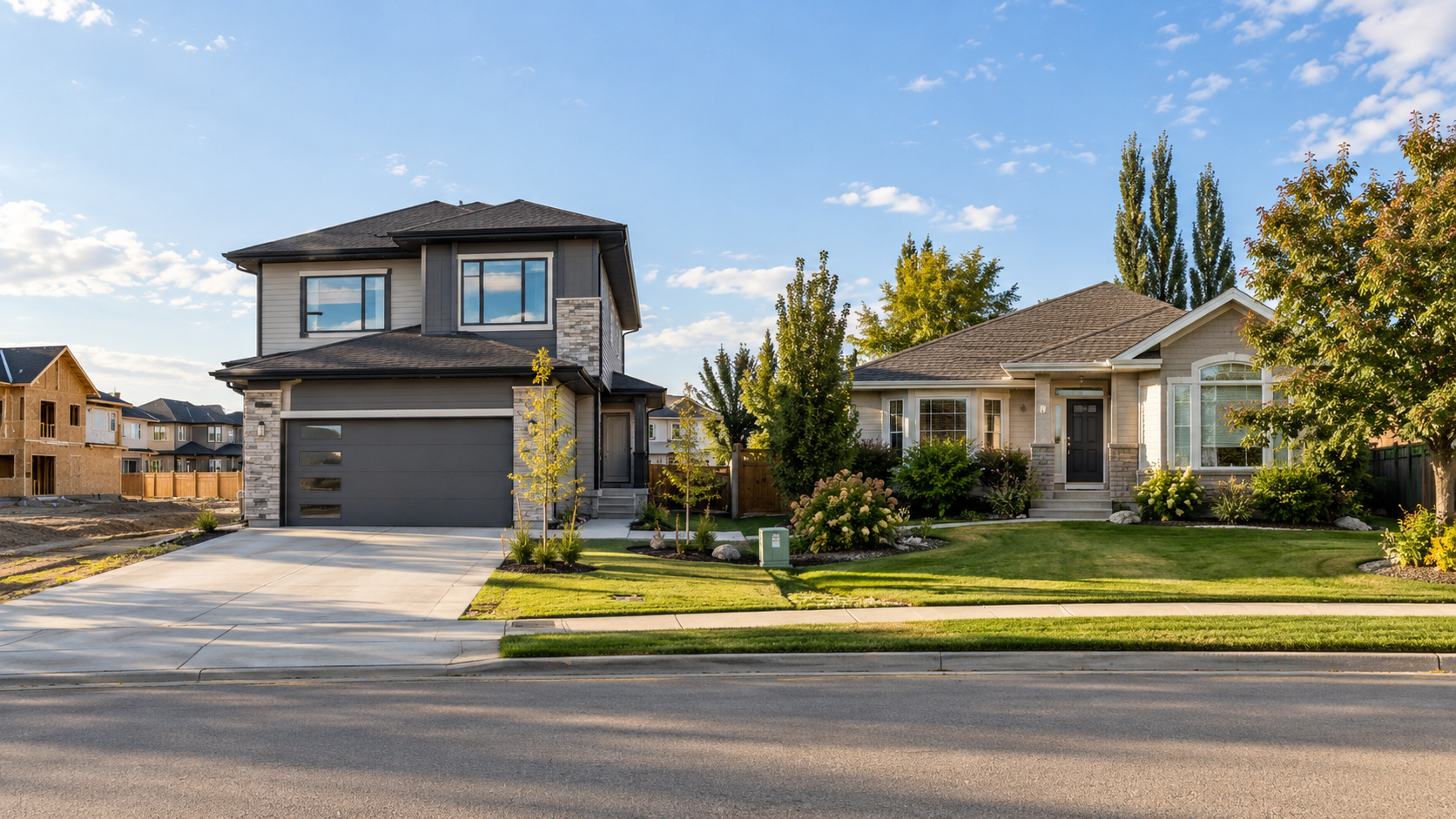
Read

Is Edmonton a Buyer's Market? What 18,544 Homes Under Construction Mean for You

Quick take: Edmonton's resale market softened in August, sales down, inventory up, prices flat to slightly lower, while the city simultaneously kept 18,544 homes moving through construction, one of the strongest population-adjusted building rates of any major Canadian market. Those two facts are usually reported separately. Looked at together, they point toward more choice and more negotiating room for buyers over the months ahead, whether they're shopping resale or new construction.

This article is part of my Edmonton New Construction Buyer’s Guide.

Free download: my New-Construction Buyer Checklist. Two printable pages, from your first show home visit to your one-year warranty.

Edmonton Real Estate Market Snapshot  September 2026

The latest complete statistics available when this article was published cover August 2026, for Greater Edmonton (Edmonton and several surrounding municipalities), alongside CMHC's newest construction data reported September 16, 2026.

Sources: REALTORS® Association of Edmonton, August 2026 statistics; CMHC, Fall 2026 Housing Supply Report and August 2026 construction data; Bank of Canada, September 2, 2026 rate decision.

For current advertised mortgage-rate examples, see MortgagesForLess.ca's Alberta mortgage rates. For Bank of Canada announcements and local context, see Edmonton Home Team's Bank of Canada updates. Actual mortgage rates vary by lender, down payment, mortgage-insurance status, amortization, property and borrower qualifications.

What the Board's Own Numbers Show

  • Sales: 2,143 residential sales in August, down 15.4% from July and down 9.8% from a year earlier

  • New listings: 3,769, down 8.1% month over month but still up 3.3% year over year

  • Inventory: 15.1% higher than August 2025

  • Average selling price: $469,602, down 1.1% from July but up 1.8% year over year

  • MLS® HPI composite benchmark price: $426,900, down 0.6% from July and down 0.6% from August 2025

  • Sales-to-new-listings ratio: approximately 56.9% (2,143 sales ÷ 3,769 new listings)

The REALTORS® Association of Edmonton didn't officially call this a buyer's market. But its own language is worth paying attention to, the Association said there are indicators that "a shift in the wider market is taking place," and warned that ample supply without enough demand could put downward pressure on prices beyond normal seasonal patterns.

That sales-to-new-listings ratio of 56.9% still sits inside the standard "balanced" range on paper. What matters more is the direction: sales falling, inventory building, the benchmark price softening, and the board itself flagging what could happen next if demand doesn't keep pace.

Meanwhile, Edmonton Keeps Building

CMHC's newest data shows Edmonton had 18,544 homes under construction in August 2026, up from 18,289 in July. The pipeline has grown every month since spring:

  • May: 17,440

  • June: 17,878

  • July: 18,289

  • August: 18,544

The growth rate is slowing, though:

  • May → June: +2.5%

  • June → July: +2.3%

  • July → August: +1.4%

At the same time, approved units waiting to start construction have moved from 5,503 in June to 5,316 in July and 5,262 in August. That doesn't mean Edmonton builders have stopped building, they haven't. It means a very large amount of housing is still moving through the pipeline, while there are early signs worth watching around what comes next.

Edmonton Is Still Building at One of the Strongest Rates Among Major Canadian Markets

A raw number like 18,544 doesn't tell you whether that's actually a lot relative to the size of the city. CMHC's Fall 2026 Housing Supply Report answers that by comparing housing starts per 10,000 residents across major Canadian markets for the first half of 2026:

  • Calgary: 61

  • Edmonton: 51

  • Vancouver: 41

  • Ottawa: 37

  • Montréal: 30

  • Toronto: 19

Bar chart of housing starts per 10,000 people in the first half of 2026: Calgary 61, Edmonton 51, Vancouver 41, Ottawa 37, Montreal 30, Toronto 19 (source: CMHC)

Among the six markets CMHC compared, only Calgary built more per capita. Edmonton's rate is down about 20% from the unusually high pace set in 2025, but CMHC's own report notes construction here "remains above historical averages", meaning this is a slowdown from a very high level, not from a low one. A significant amount of housing is already committed and will keep moving toward completion regardless of what resale demand does in the short term.

Why Completions Bounce Around So Much

July completions jumped to 1,729 units. In August they dropped 11.4% to 1,532. I wouldn't read too much into either month by itself.

Multi-family construction makes completion numbers naturally lumpy. If a large apartment project finishes, hundreds of units can move into the completed category at essentially the same time, July's 1,729 completions included 908 apartment units, more than half the total, almost certainly reflecting one or two larger buildings wrapping up at once. The next month can then show a substantial decline without anything fundamentally changing in the market. That's why the overall construction pipeline is more informative than whether completions happen to be up or down in any single month.

What This Means If You're Buying

  • You likely have more room to compare homes, neighbourhoods, builders and specifications than you did a year ago, rather than feeling pressure to jump at the first listing that fits.

  • New construction and resale increasingly compete for the same buyers, a family looking at a detached home might be comparing a five-year-old resale property with a quick-possession home from a builder.

  • If you're considering new construction, look at the all-in price, not just the advertised base price. Confirm whether GST is included and whether the builder's price assumes an available rebate. Qualifying first-time buyers may be eligible for up to $50,000 through the [First-Time Home Buyers’ GST Rebate]. Builder incentives, such as appliances, air conditioning, landscaping, upgrades or possession terms, should also be valued based on what they are actually worth to you.

    Financing conditions matter too. Buyers should compare current mortgage rates, but amortization can matter just as much. If your down payment is less than 20%, a 30-year insured mortgage may be available if you're a first-time buyer and/or purchasing a new build. See my 2026 guide to 30-year mortgages in Alberta for the current rules and payment trade-offs.

If you want a second set of eyes on a specific listing or builder offer before you commit, call or text Jay Lewis at 780-220-8449 no pressure, just a sounding board.

What This Means If You're Selling

  • Understanding your competition matters more than it did a year ago, and your competition may not just be another resale home down the street. If you're near an active new community, buyers may be comparing your home against a brand-new property.

  • That comparison isn't purely about price. A resale home may already have landscaping, fencing, a deck, window coverings, appliances or a finished basement; a new home may offer warranty coverage and modern systems. Buyers weigh the whole package.

  • With inventory up 15.1% year over year, accurate pricing from the start matters. Overpricing into a market with this much competing supply typically means a longer time on market and eventual price reductions.

If you're weighing when to list or how to price against nearby new construction, reach out to Jay Lewis at 780-220-8449 or jay@jaysells.ca for a current comparison of your specific street.

What This Means If You're Building or Considering New Construction

  • A growing under-construction count paired with a shrinking not-yet-started pool suggests the next wave of completions will land in a resale market that's already softening, worth factoring into your timing if you have flexibility.

  • If you want a deeper comparison of the two paths, I've written a full guide to new construction vs. resale homes in Edmonton, covering warranty coverage, GST treatment, contract terms and what to watch for with a builder's sales representative.

  • Before you register with or visit a builder's show home, contact Jay Lewis at 780-220-8449 if you want your own representation, builder cooperation and registration policies vary, and some require your REALTOR® to be identified at the first visit.

So, Is Edmonton Becoming a Buyer's Market?

The numbers tell us something more useful than the label. Inventory is higher, sales are lower, the benchmark price has softened slightly, and the REALTORS® Association of Edmonton is openly warning that prices could face additional downward pressure if demand doesn't keep pace with supply. That's a market shifting in the buyer's direction.

But Edmonton isn't experiencing a housing-market collapse. The benchmark price is only 0.6% lower than a year ago, while the average selling price remains 1.8% higher. Both things can be true at once: buyers can be gaining leverage without prices falling dramatically.

What I'm Watching Next

The more interesting question isn't whether we can officially call Edmonton a buyer's market today, it's what happens next. Resale inventory is already elevated and demand has softened, while 18,544 homes remain under construction and Edmonton posts one of the strongest population-adjusted building rates among major Canadian markets. If resale inventory stays elevated while that construction pipeline moves toward completion, buyers could gain additional leverage. If demand strengthens enough to absorb the new supply, the picture could shift again. That's why I'm watching the pipeline, not just this month's sales number.

For buyers right now, the important thing is that you have something valuable: more choice. Use it.

Get the New-Construction Buyer Checklist

Trying to decide between new construction and resale in Edmonton or the surrounding area? Contact Jay Lewis for a new-construction buyer checklist and a side-by-side comparison of what your budget can buy in both markets.

Call or text Jay Lewis: 780-220-8449 Email: jay@jaysells.ca Website: jaysells.ca

Get my free New-Construction Buyer Checklist

Thinking about a new build? My free, printable 2-page checklist covers what to check at every stage, from your first show home visit to your one-year warranty.

Get the free checklist →

Frequently Asked Questions

Is Edmonton a Buyer's Market in 2026?

Edmonton is showing more buyer-friendly conditions, but the market is not uniform across every neighbourhood, property type or price range. In August, inventory was 15.1% higher than a year earlier while residential sales were 9.8% lower. The better takeaway is that many buyers have more choice and negotiating room than they did earlier in the year.

How Many Homes Are Under Construction in Edmonton?

CMHC reported 18,544 homes under construction in the Edmonton CMA in August 2026, up from 18,289 in July.

Is Edmonton Still Building a Lot of Homes Compared With Other Canadian Cities?

Yes. Edmonton recorded approximately 51 housing starts per 10,000 residents in the first half of 2026, placing it among the highest construction rates of the major markets compared in the CMHC report.

Why Are So Many Homes Still Under Construction if the Market Is Slowing?

Construction responds to changing conditions with a delay. Homes and multi-family projects that are already underway continue toward completion even when resale demand begins to soften.

Could More New Construction Push Edmonton Home Prices Lower?

More supply can increase buyer choice and competition, but construction alone does not determine prices. Demand, population growth, interest rates, location, property type and the pace at which inventory is absorbed all matter.

Should I Wait to Buy a Home in Edmonton?

There is no reliable way to identify the exact bottom of a housing market in advance. More inventory can create better selection and negotiating opportunities, but the decision should depend on the specific property, your financing, your timeline and how long you expect to own the home.

Why Did Edmonton Home Completions Drop in August?

Monthly completions can vary significantly, particularly when large multi-family projects finish in batches. One month's decline does not necessarily indicate that construction activity has stopped or materially changed direction.

Sources and Important Information

Thinking About Buying in Edmonton?

If you're comparing your options or planning a move in Edmonton, Sherwood Park, Fort Saskatchewan, Devon, Spruce Grove or Stony Plain, I can help you understand how the details fit into the bigger picture. With more than 25 years in new construction, on the trades and sales sides, I bring a builder’s eye perspective to the buying process.

Call or text Jay Lewis at 780-220-8449

Jay Lewis | REALTOR® | RE/MAX Excellence

Want to see more Edmonton real-estate updates from JaySells.ca in Google? Add JaySells.ca as a Preferred Source.

This article provides general information only and is not legal, tax, accounting or mortgage advice. Real-estate market statistics, construction data and mortgage rates can change. Confirm information that applies to your specific transaction with the appropriate qualified professional. The August 2026 completions figure for Edmonton is cited as reported by CMHC's September 16 release.

Read

New Construction vs. Resale Homes in Edmonton: Which Is Better in 2026?

Short answer: Neither option is automatically better. New construction offers current building standards, mandatory warranty protection on most qualifying homes, and opportunities to choose finishes or structural options. Resale offers established neighbourhoods, a negotiated possession date, and generally no GST on a typical previously occupied home. The right choice depends on your budget, preferred location, timeline, tolerance for construction uncertainty and the total cost of each property.

This article is part of my Edmonton New Construction Buyer’s Guide.

Free download: my New-Construction Buyer Checklist. Two printable pages, from your first show home visit to your one-year warranty. Handy if you're weighing a new build against resale.

If you are buying in Edmonton or the surrounding area in 2026, compare the two options using all-in costs, not only the advertised price.


Edmonton Real Estate Market Snapshot, September 2026

The latest complete statistics available when this article was published cover August 2026. The figures below are for the Greater Edmonton Area (GEA), which includes Edmonton and several surrounding municipalities.

Market indicatorAugust 2026
Average MLS® residential selling price$469,602 (+1.8% year over year)
Median MLS® residential selling price$439,000 (+0.9% year over year)
MLS® HPI composite benchmark price$426,900 (−0.6% year over year)
Single-family HPI benchmark priceApproximately $525,000 (−0.2% year over year)
Residential inventory8,052 properties (+15.1% year over year)
Months of inventory3.8 months
Average days on market for monthly sales41 days, compared with 37 days in August 2025
Residential sales2,143 (−9.8% year over year)
Bank of Canada policy rate2.25%, held September 2, 2026
Advertised five-year fixed mortgage ratesApproximately 4.09% to 4.64%, depending on the mortgage and borrower

Sources: REALTORS® Association of Edmonton, August 2026 statistics and Bank of Canada, September 2, 2026 decision.

For current advertised mortgage-rate examples, see MortgagesForLess.ca’s Alberta mortgage rates. For Bank of Canada announcements and local context, see Edmonton Home Team’s Bank of Canada updates. Actual mortgage rates vary by lender, down payment, mortgage-insurance status, amortization, property and borrower qualifications.

See MortgagesForLess.ca’s Alberta mortgage rates, and the Edmonton Home Team Bank of Canada updates for additional context.


What the 2026 Market Means for Buyers

The August numbers point to a market with more supply and slower sales than one year earlier. Inventory was 15.1% higher, sales were 9.8% lower and properties that sold took an average of 41 days rather than 37.

That does not mean every property is easy to negotiate. Conditions vary by municipality, neighbourhood, price range and property type. Attractive homes that are priced appropriately can still sell quickly, while properties that miss the market may remain available longer.

For buyers, the practical message is straightforward: there may be more opportunity to compare properties and negotiate than there was in a tighter market, but strong listings can still require prompt decisions.

New construction adds another layer of supply that MLS® statistics do not fully capture. As of September 2026, Livabl listed approximately 299 new-home communities, including 181 single-family communities, 2,827 floorplans and units, and 946 quick-possession homes in its Edmonton search area.

Those figures are not directly comparable with MLS® inventory. Livabl’s database includes developments that are planned, under construction or recently completed, along with builder inventory that may or may not be listed on MLS®. The numbers are useful as an indication of the size of the broader new-construction market, not as a count of communities with homes available for immediate purchase. Not every new-construction opportunity is advertised on MLS®. Contact Jay Lewis at  780-220-8449 before registering with or visiting a builder to compare MLS® listings with builder-marketed quick-possession and to-be-built homes that may be available.


Option 1: Buying New Construction

What new construction can offer

A home built to current requirements. A newly permitted home must meet the building requirements applicable to its construction. Newer homes commonly include updated insulation, air-sealing, windows and mechanical systems compared with older homes that have not been upgraded. Actual utility costs still depend on the home’s size, design, systems, weather and occupants’ energy use.

Mandatory warranty protection on most qualifying new homes. Under Alberta’s New Home Buyer Protection Act, most new homes with building permits applied for on or after February 1, 2014 require warranty coverage. The minimum protection is:

  • One year for labour and materials

  • Two years for defects in delivery and distribution systems, including electrical, plumbing, heating, ventilation and air conditioning

  • Five years for the building envelope

  • Ten years for major structural components

There are limited exemptions, including certain authorized owner-built homes. Coverage also has terms, limits and exclusions. Alberta new-home warranty overview.

Opportunities to personalize the home. Depending on when you purchase and what the builder permits, you may be able to choose finishes, cabinetry, flooring, countertops and fixtures. Some builders also offer structural options such as garage changes, additional windows, separate entrances or modified layouts. The options and deadlines vary by builder and stage of construction.

Potential GST relief for eligible buyers. Qualifying first-time buyers may recover up to 100% of the federal GST on a qualifying new home valued at $1 million or less, to a maximum of $50,000. The first-time-buyer rebate is reduced between $1 million and $1.5 million and is unavailable at $1.5 million or more. Eligibility and transaction dates matter.

Read the complete 2026 Alberta new-home GST rebate guide.

What buyers need to watch

The total price, not the base price. A builder’s starting price may not include the lot premium, preferred elevation, upgrades, landscaping, fencing, window coverings, appliances, deck, garage finishing or other items a buyer expects. GST may already be included in the advertised price, and the price may assume that an available rebate is assigned to the builder.

Before comparing a new home with resale, request a written breakdown of:

  • Base price and lot premium

  • Included specifications

  • Selected upgrades

  • GST and assumed rebates

  • Deposits and payment schedule

  • Closing adjustments

  • Items the buyer must complete after possession

Construction and possession timing. A home built from the ground up normally requires a much longer timeline than a typical resale purchase. The builder’s estimated possession date can change because of permitting, materials, labour, weather, inspections and other contract terms. A quick-possession home may be available considerably sooner, but the buyer has less opportunity to change the design and finishes.

Location and developing amenities. New greenfield construction exists around Edmonton’s outer south, southwest, west, southeast, northeast and north edges, as well as in surrounding municipalities. Choices vary by home type and builder.

New communities can involve ongoing construction, changing traffic patterns and amenities that are not complete. School sites and commercial areas shown on a concept plan do not guarantee a specific completion date. Buyers should verify the schools, transportation and services available today and recognize that school attendance boundaries can change.

The contract. Builder agreements are commonly written by the builder and can differ substantially from a standard resale contract. Buyers should understand deposit terms, financing conditions, construction changes, measurements, possession delays, closing adjustments, inspection rights and warranty procedures. Independent legal advice should be obtained before the agreement becomes firm.


The Builder’s Sales Representative and Your Representation

The builder’s sales representative works for the builder. Their role is not the same as having a real-estate professional representing the buyer’s interests.

Builder policies concerning REALTOR® cooperation and registration vary. Some require the buyer’s REALTOR® to accompany the buyer or be identified at the first visit or registration. If you want your own representation, contact your REALTOR® before visiting a show home, registering online or beginning direct negotiations with a builder.

Buyer representation can help with more than finding the development. It can include comparing lots, reviewing specifications and allowances, identifying omitted items, evaluating upgrade costs, understanding the builder’s paperwork, planning inspections, attending walkthroughs and documenting deficiencies. Legal questions and contract interpretation should still be handled by the buyer’s lawyer.


Inspections, Walkthroughs and Deficiency Lists on a New Home

A warranty is valuable, but it is not a substitute for careful inspections and documentation.

Depending on the builder, contract and stage of construction, a buyer may consider:

  • Reviewing plans, specifications and change orders during construction

  • Asking whether independent progress inspections are permitted

  • Completing a detailed pre-possession walkthrough

  • Recording incomplete or deficient work in writing

  • Learning the builder and warranty provider’s reporting deadlines

  • Considering an independent home inspection before possession or during the first warranty year

Warranty programs address eligible defects after the applicable requirements are met. Identifying and documenting concerns early can make them easier to address.

Jay Lewis reviewing construction details in a new Edmonton home

Illustrative image of Jay Lewis reviewing a new home’s construction details.

This is an area where my background matters. I bring more than 25 years in new construction, on the trades and sales sides, including framing, renovations, full contract builds, and helping clients buy and sell new-construction homes. I do not present myself as the builder or replace the work of inspectors, engineers or lawyers. My role is to help buyers ask better questions, compare what is included and recognize details that may deserve closer review.


Option 2: Buying a Resale Home

Resale homes in an established Edmonton neighbourhood

An established Edmonton-area streetscape, shown for illustration.

What resale can offer

Established locations. Resale gives buyers access to mature neighbourhoods, existing schools and services, established transit routes, completed landscaping and a wider range of locations. Buyers should still verify current school attendance areas and future plans rather than assume they will never change.

Generally no GST on a typical previously occupied home. Most ordinary sales of used residential homes are exempt from GST. Exceptions can arise, including certain substantially renovated properties or unusual transactions, so buyers should obtain tax and legal advice when the property’s history is unclear.

A negotiated possession date. Unlike a home that is still being constructed, a completed resale property allows the buyer and seller to negotiate a specific possession date in the purchase contract. The date is not solely the buyer’s choice, it must be accepted by both parties.

The ability to assess what already exists. Buyers can see the finished home, lot, street and surrounding development. A home inspection can help identify visible concerns before conditions are removed, although no inspection can guarantee that every concealed or future issue will be found.

What buyers need to watch

Age and condition. Roofing, windows, drainage, foundation, plumbing, electrical systems, heating equipment and previous renovations can all affect future costs. The home’s age alone does not determine its condition; maintenance and the quality of previous work matter.

Renovation costs. A lower resale purchase price may not remain lower after replacing flooring, kitchens, bathrooms, windows or mechanical systems. Compare the realistic cost of making the property work for you, not only its purchase price.

Remaining new-home warranty. A newer resale home may still have warranty protection. Alberta’s new-home warranty attaches to the home, not only to the original owner, and remains in effect after a resale until the applicable coverage expires. Buyers can search Alberta’s property registry and review the warranty documents to determine what remains.


The GST Difference: Compare the Contract, Not the Headline Price

New homes in Alberta are generally subject to 5% federal GST. A qualifying first-time buyer may receive substantial relief under the First-Time Home Buyers’ GST/HST Rebate, while another buyer may pay more GST on the same home.

That does not mean every eligible buyer receives money back after closing. The builder may credit an assumed rebate in the contract and require the buyer to assign the rebate to the builder. If the buyer does not qualify, the contract may require the buyer to pay the difference.

When comparing new construction with resale, determine:

  1. Whether the new-home price includes GST

  2. Whether an assumed rebate has already been deducted

  3. Which rebate the buyer may qualify for

  4. Who will apply for or receive the rebate

  5. What the buyer owes if the CRA denies the claim

Confirm the calculation with the builder, CRA, an accountant and your real-estate lawyer before relying on the rebate in your budget.


New Construction vs. Resale: Side-by-Side Comparison

ConsiderationNew constructionResale
GSTGenerally subject to 5% GST; rebates may be availableMost typical used-home sales are GST-exempt
WarrantyMandatory 1/2/5/10-year minimum coverage on most qualifying new homesA newer resale may retain the balance of its original new-home warranty
PossessionDepends on construction stage and contract; estimates may changeA specific date is negotiated between buyer and seller
CustomizationOften available when purchased early enoughExisting layout and finishes; renovations are completed after purchase
LocationCommon in developing areas, infill projects and surrounding municipalitiesBroad choice across established and developing neighbourhoods
Energy performanceBuilt to requirements applying at the time of constructionVaries by age, construction, upgrades and maintenance
Inspection needsWalkthroughs and independent inspections remain valuableA pre-purchase inspection is an important risk-management tool
Price comparisonMust include lot, upgrades, GST treatment and unfinished itemsMust include anticipated repairs, replacements and renovations
Neighbourhood certaintyFuture amenities and construction timelines may changeExisting surroundings are visible, although future change remains possible

Who Is Usually Better Suited to Each Option?

New construction may make more sense when you:

  • Have flexibility around the possession timeline

  • Value warranty protection and newer systems

  • Want to choose finishes or available design options

  • Are comfortable living in a developing area or buying infill

  • Are prepared to compare the complete specifications and all-in price

  • May qualify for the First-Time Home Buyers’ GST/HST Rebate

Resale may make more sense when you:

  • Need to negotiate a specific possession date

  • Want an established neighbourhood or particular location

  • Prefer to evaluate the completed home and surroundings

  • Want to avoid the uncertainty of a construction schedule

  • Find a home whose condition and renovation needs fit your budget

Many buyers will not know which option is better until they view both. Comparing resale properties in the locations you prefer with new homes at a similar all-in budget is often the clearest way to decide.


What Sellers Should Know in 2026

New construction is also part of the competition for resale sellers, particularly in areas near active developments.

A resale home may compete well by offering an established yard, completed window coverings, appliances, fencing, a deck, a finished basement, air conditioning or a faster and more dependable possession timeline. A new home may compete through warranty protection, modern design, builder financing promotions or buyer choice.

When pricing a resale property, sellers should compare more than another home’s advertised base price. The relevant comparison is the buyer’s likely finished, all-in cost and the value of what is already included in the resale property.

With Greater Edmonton inventory 15.1% higher than a year earlier, accurate pricing and clear presentation matter. That does not mean every seller must discount heavily; it means buyers have more alternatives and are more likely to compare value carefully.


My Take as a Local REALTOR®

New construction and resale are different products, and I do not believe buyers should decide between them based on assumptions.

With more than 25 years in new construction, on the trades and sales sides, including framing, renovations, full contract builds, and helping clients buy and sell new-construction homes, I look beyond the show-home finishes. The lot, specifications, allowances, upgrade pricing, contract terms, walkthrough process and items excluded from the price can matter as much as the floor plan.

Resale deserves the same practical analysis. An older home can be well built and carefully maintained, while a newer home can still require close inspection. The goal is not to declare every new home better than every resale home. It is to understand exactly what you are buying, what remains to be completed and what the full cost is likely to be.

My usual approach is to compare both options at the same time: resale homes in the locations the buyer actually wants and new-construction opportunities at a similar all-in budget. That comparison normally makes the trade-offs much clearer.


Get the New-Construction Buyer Checklist

Thinking about buying a new-construction or resale home in Edmonton or the surrounding area?

Contact me for my new-construction buyer checklist and a side-by-side comparison of what your budget can buy in both markets.

Call or text: 780-220-8449
Email: jay@jaysells.ca
Website: jaysells.ca

Contact me before registering online or visiting a builder if you want your own representation. Builder cooperation and registration policies vary.


Get my free New-Construction Buyer Checklist

Thinking about a new build? My free, printable 2-page checklist covers what to check at every stage, from your first show home visit to your one-year warranty.

Get the free checklist →

Frequently Asked Questions

Is there GST on a resale home in Alberta?

Most sales of previously occupied residential homes are exempt from GST. Exceptions can apply, including certain substantially renovated properties and unusual transactions. Obtain professional advice if the property’s tax status is uncertain.

Do buyers always pay the full 5% GST on a new home?

No. Eligible buyers may qualify for the existing GST/HST New Housing Rebate, the First-Time Home Buyers’ GST/HST Rebate or another applicable housing rebate. The builder’s advertised price may also include GST and assume assignment of a rebate. Review the contract and confirm eligibility before relying on any rebate.

What warranty comes with a new home in Alberta?

Most qualifying new homes require minimum coverage of one year for labour and materials, two years for delivery and distribution systems, five years for the building envelope and ten years for major structural components. Coverage has conditions, exclusions and limits.

Does warranty coverage transfer when a newer home is resold?

Yes. Alberta states that the new-home warranty is attached to the home, not the owner, and remains in effect after resale until the applicable coverage expires.

How long does an Edmonton new home take to build?

There is no single reliable timeline for every home. It depends on the builder, permits, construction type, design selections, labour, materials, weather and contract. Ask for the builder’s current written estimate and review what the agreement permits if possession is delayed. Quick-possession homes are generally available sooner because construction is already underway or complete.

Can buyers negotiate with an Edmonton home builder?

Terms vary by builder, project, property and market conditions. Buyers can ask about the price, lot premium, included specifications, upgrades, appliances, landscaping, closing costs and current incentives. Compare the net value of the complete package rather than focusing only on a price reduction.

Where is new construction happening around Edmonton?

New construction is found around Edmonton’s outer south, southwest, west, southeast, northeast and north edges, through infill projects in established neighbourhoods, and in surrounding municipalities. Current availability varies by builder and housing type.

Is an inspection worthwhile on a new home?

Yes. A new-home warranty does not eliminate the value of inspections, walkthroughs and a detailed written deficiency list. Inspection opportunities depend on the builder contract and construction stage, so buyers should clarify their rights before signing.

Should I choose new construction or resale in 2026?

Choose based on the total cost, desired location, timeline, condition, warranty, included features and your comfort with construction uncertainty. The best decision normally comes from comparing actual homes in both categories rather than comparing general assumptions.


Sources and Important Information

This article provides general information only and is not legal, tax, accounting, engineering, inspection or mortgage advice. Real-estate market statistics, mortgage rates, builder inventory, incentives and government programs can change. Confirm information that applies to your transaction with the appropriate qualified professional.

If you're comparing your options or planning a move in Edmonton, Sherwood Park, Fort Saskatchewan, Devon, Spruce Grove or Stony Plain, I can help you understand how the details fit into the bigger picture. With more than 25 years in new construction, on the trades and sales sides, I bring a builder’s-eye perspective to the buying process.

Call or text Jay Lewis at 780-220-8449

Jay Lewis | REALTOR® | RE/MAX Excellence

Want to see more Edmonton real-estate updates from JaySells.ca in Google? Add JaySells.ca as a Preferred Source.

Read
Data last updated on October 16, 2026 at 09:30 PM (UTC).
Copyright 2026 by the REALTORS® Association of Edmonton. All Rights Reserved.
Data is deemed reliable but is not guaranteed accurate by the REALTORS® Association of Edmonton.
The trademarks REALTOR®, REALTORS® and the REALTOR® logo are controlled by The Canadian Real Estate Association (CREA) and identify real estate professionals who are members of CREA. The trademarks MLS®, Multiple Listing Service® and the associated logos are owned by CREA and identify the quality of services provided by real estate professionals who are members of CREA.
Text Jay