

Short answer: Neither option is automatically better. New construction offers current building standards, mandatory warranty protection on most qualifying homes, and opportunities to choose finishes or structural options. Resale offers established neighbourhoods, a negotiated possession date, and generally no GST on a typical previously occupied home. The right choice depends on your budget, preferred location, timeline, tolerance for construction uncertainty and the total cost of each property.
If you are buying in Edmonton or the surrounding area in 2026, compare the two options using all-in costs, not only the advertised price.
Edmonton Real Estate Market Snapshot — September 2026
The latest complete statistics available when this article was published cover August 2026. The figures below are for the Greater Edmonton Area (GEA), which includes Edmonton and several surrounding municipalities.
Sources: REALTORS® Association of Edmonton — August 2026 statistics and Bank of Canada — September 2, 2026 decision.
For current advertised mortgage-rate examples, see MortgagesForLess.ca’s Alberta mortgage rates. For Bank of Canada announcements and local context, see Edmonton Home Team’s Bank of Canada updates. Actual mortgage rates vary by lender, down payment, mortgage-insurance status, amortization, property and borrower qualifications.
See MortgagesForLess.ca’s Alberta mortgage rates, and the Edmonton Home Team Bank of Canada updates for additional context.
What the 2026 Market Means for Buyers
The August numbers point to a market with more supply and slower sales than one year earlier. Inventory was 15.1% higher, sales were 9.8% lower and properties that sold took an average of 41 days rather than 37.
That does not mean every property is easy to negotiate. Conditions vary by municipality, neighbourhood, price range and property type. Attractive homes that are priced appropriately can still sell quickly, while properties that miss the market may remain available longer.
For buyers, the practical message is straightforward: there may be more opportunity to compare properties and negotiate than there was in a tighter market, but strong listings can still require prompt decisions.
New construction adds another layer of supply that MLS® statistics do not fully capture. As of September 2026, Livabl listed approximately 299 new-home communities, including 181 single-family communities, 2,827 floorplans and units, and 946 quick-possession homes in its Edmonton search area.
Those figures are not directly comparable with MLS® inventory. Livabl’s database includes developments that are planned, under construction or recently completed, along with builder inventory that may or may not be listed on MLS®. The numbers are useful as an indication of the size of the broader new-construction market—not as a count of communities with homes available for immediate purchase. Not every new-construction opportunity is advertised on MLS®. Contact Jay Lewis at 780-220-8449 before registering with or visiting a builder to compare MLS® listings with builder-marketed quick-possession and to-be-built homes that may be available.
Option 1: Buying New Construction
What new construction can offer
A home built to current requirements. A newly permitted home must meet the building requirements applicable to its construction. Newer homes commonly include updated insulation, air-sealing, windows and mechanical systems compared with older homes that have not been upgraded. Actual utility costs still depend on the home’s size, design, systems, weather and occupants’ energy use.
Mandatory warranty protection on most qualifying new homes. Under Alberta’s New Home Buyer Protection Act, most new homes with building permits applied for on or after February 1, 2014 require warranty coverage. The minimum protection is:
One year for labour and materials
Two years for defects in delivery and distribution systems, including electrical, plumbing, heating, ventilation and air conditioning
Five years for the building envelope
Ten years for major structural components
There are limited exemptions, including certain authorized owner-built homes. Coverage also has terms, limits and exclusions. Alberta new-home warranty overview.
Opportunities to personalize the home. Depending on when you purchase and what the builder permits, you may be able to choose finishes, cabinetry, flooring, countertops and fixtures. Some builders also offer structural options such as garage changes, additional windows, separate entrances or modified layouts. The options and deadlines vary by builder and stage of construction.
Potential GST relief for eligible buyers. Qualifying first-time buyers may recover up to 100% of the federal GST on a qualifying new home valued at $1 million or less, to a maximum of $50,000. The first-time-buyer rebate is reduced between $1 million and $1.5 million and is unavailable at $1.5 million or more. Eligibility and transaction dates matter.
Read the complete 2026 Alberta new-home GST rebate guide.
What buyers need to watch
The total price—not the base price. A builder’s starting price may not include the lot premium, preferred elevation, upgrades, landscaping, fencing, window coverings, appliances, deck, garage finishing or other items a buyer expects. GST may already be included in the advertised price, and the price may assume that an available rebate is assigned to the builder.
Before comparing a new home with resale, request a written breakdown of:
Base price and lot premium
Included specifications
Selected upgrades
GST and assumed rebates
Deposits and payment schedule
Closing adjustments
Items the buyer must complete after possession
Construction and possession timing. A home built from the ground up normally requires a much longer timeline than a typical resale purchase. The builder’s estimated possession date can change because of permitting, materials, labour, weather, inspections and other contract terms. A quick-possession home may be available considerably sooner, but the buyer has less opportunity to change the design and finishes.
Location and developing amenities. New greenfield construction exists around Edmonton’s outer south, southwest, west, southeast, northeast and north edges, as well as in surrounding municipalities. Choices vary by home type and builder.
New communities can involve ongoing construction, changing traffic patterns and amenities that are not complete. School sites and commercial areas shown on a concept plan do not guarantee a specific completion date. Buyers should verify the schools, transportation and services available today and recognize that school attendance boundaries can change.
The contract. Builder agreements are commonly written by the builder and can differ substantially from a standard resale contract. Buyers should understand deposit terms, financing conditions, construction changes, measurements, possession delays, closing adjustments, inspection rights and warranty procedures. Independent legal advice should be obtained before the agreement becomes firm.
The Builder’s Sales Representative and Your Representation
The builder’s sales representative works for the builder. Their role is not the same as having a real-estate professional representing the buyer’s interests.
Builder policies concerning REALTOR® cooperation and registration vary. Some require the buyer’s REALTOR® to accompany the buyer or be identified at the first visit or registration. If you want your own representation, contact your REALTOR® before visiting a show home, registering online or beginning direct negotiations with a builder.
Buyer representation can help with more than finding the development. It can include comparing lots, reviewing specifications and allowances, identifying omitted items, evaluating upgrade costs, understanding the builder’s paperwork, planning inspections, attending walkthroughs and documenting deficiencies. Legal questions and contract interpretation should still be handled by the buyer’s lawyer.
Inspections, Walkthroughs and Deficiency Lists on a New Home
A warranty is valuable, but it is not a substitute for careful inspections and documentation.
Depending on the builder, contract and stage of construction, a buyer may consider:
Reviewing plans, specifications and change orders during construction
Asking whether independent progress inspections are permitted
Completing a detailed pre-possession walkthrough
Recording incomplete or deficient work in writing
Learning the builder and warranty provider’s reporting deadlines
Considering an independent home inspection before possession or during the first warranty year
Warranty programs address eligible defects after the applicable requirements are met. Identifying and documenting concerns early can make them easier to address.

Illustrative image of Jay Lewis reviewing a new home’s construction details.
This is an area where my background matters. I bring more than 20 years of residential construction and real-estate experience, including framing, renovations, full contract builds, and helping clients buy and sell new-construction homes. I do not present myself as the builder or replace the work of inspectors, engineers or lawyers. My role is to help buyers ask better questions, compare what is included and recognize details that may deserve closer review.
Option 2: Buying a Resale Home
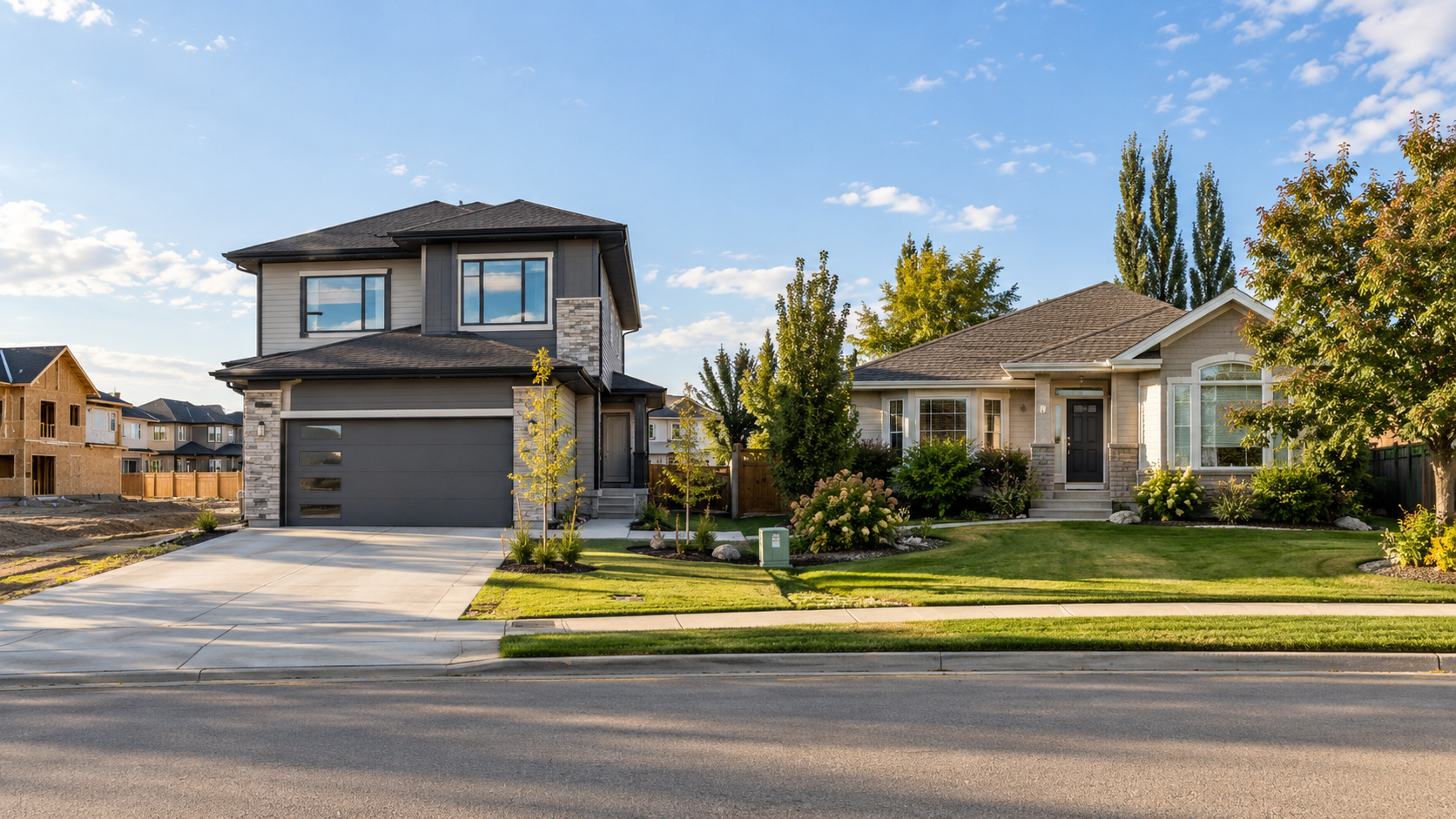
An established Edmonton-area streetscape, shown for illustration.
What resale can offer
Established locations. Resale gives buyers access to mature neighbourhoods, existing schools and services, established transit routes, completed landscaping and a wider range of locations. Buyers should still verify current school attendance areas and future plans rather than assume they will never change.
Generally no GST on a typical previously occupied home. Most ordinary sales of used residential homes are exempt from GST. Exceptions can arise, including certain substantially renovated properties or unusual transactions, so buyers should obtain tax and legal advice when the property’s history is unclear.
A negotiated possession date. Unlike a home that is still being constructed, a completed resale property allows the buyer and seller to negotiate a specific possession date in the purchase contract. The date is not solely the buyer’s choice—it must be accepted by both parties.
The ability to assess what already exists. Buyers can see the finished home, lot, street and surrounding development. A home inspection can help identify visible concerns before conditions are removed, although no inspection can guarantee that every concealed or future issue will be found.
What buyers need to watch
Age and condition. Roofing, windows, drainage, foundation, plumbing, electrical systems, heating equipment and previous renovations can all affect future costs. The home’s age alone does not determine its condition; maintenance and the quality of previous work matter.
Renovation costs. A lower resale purchase price may not remain lower after replacing flooring, kitchens, bathrooms, windows or mechanical systems. Compare the realistic cost of making the property work for you—not only its purchase price.
Remaining new-home warranty. A newer resale home may still have warranty protection. Alberta’s new-home warranty attaches to the home, not only to the original owner, and remains in effect after a resale until the applicable coverage expires. Buyers can search Alberta’s property registry and review the warranty documents to determine what remains.
The GST Difference: Compare the Contract, Not the Headline Price
New homes in Alberta are generally subject to 5% federal GST. A qualifying first-time buyer may receive substantial relief under the First-Time Home Buyers’ GST/HST Rebate, while another buyer may pay more GST on the same home.
That does not mean every eligible buyer receives money back after closing. The builder may credit an assumed rebate in the contract and require the buyer to assign the rebate to the builder. If the buyer does not qualify, the contract may require the buyer to pay the difference.
When comparing new construction with resale, determine:
Whether the new-home price includes GST
Whether an assumed rebate has already been deducted
Which rebate the buyer may qualify for
Who will apply for or receive the rebate
What the buyer owes if the CRA denies the claim
Confirm the calculation with the builder, CRA, an accountant and your real-estate lawyer before relying on the rebate in your budget.
New Construction vs. Resale: Side-by-Side Comparison
Who Is Usually Better Suited to Each Option?
New construction may make more sense when you:
Have flexibility around the possession timeline
Value warranty protection and newer systems
Want to choose finishes or available design options
Are comfortable living in a developing area or buying infill
Are prepared to compare the complete specifications and all-in price
May qualify for the First-Time Home Buyers’ GST/HST Rebate
Resale may make more sense when you:
Need to negotiate a specific possession date
Want an established neighbourhood or particular location
Prefer to evaluate the completed home and surroundings
Want to avoid the uncertainty of a construction schedule
Find a home whose condition and renovation needs fit your budget
Many buyers will not know which option is better until they view both. Comparing resale properties in the locations you prefer with new homes at a similar all-in budget is often the clearest way to decide.
What Sellers Should Know in 2026
New construction is also part of the competition for resale sellers, particularly in areas near active developments.
A resale home may compete well by offering an established yard, completed window coverings, appliances, fencing, a deck, a finished basement, air conditioning or a faster and more dependable possession timeline. A new home may compete through warranty protection, modern design, builder financing promotions or buyer choice.
When pricing a resale property, sellers should compare more than another home’s advertised base price. The relevant comparison is the buyer’s likely finished, all-in cost and the value of what is already included in the resale property.
With Greater Edmonton inventory 15.1% higher than a year earlier, accurate pricing and clear presentation matter. That does not mean every seller must discount heavily; it means buyers have more alternatives and are more likely to compare value carefully.
My Take as a Local REALTOR®
New construction and resale are different products, and I do not believe buyers should decide between them based on assumptions.
With more than 20 years of residential construction and real-estate experience—including framing, renovations, full contract builds, and helping clients buy and sell new-construction homes—I look beyond the show-home finishes. The lot, specifications, allowances, upgrade pricing, contract terms, walkthrough process and items excluded from the price can matter as much as the floor plan.
Resale deserves the same practical analysis. An older home can be well built and carefully maintained, while a newer home can still require close inspection. The goal is not to declare every new home better than every resale home. It is to understand exactly what you are buying, what remains to be completed and what the full cost is likely to be.
My usual approach is to compare both options at the same time: resale homes in the locations the buyer actually wants and new-construction opportunities at a similar all-in budget. That comparison normally makes the trade-offs much clearer.
Get the New-Construction Buyer Checklist
Thinking about buying a new-construction or resale home in Edmonton or the surrounding area?
Contact me for my new-construction buyer checklist and a side-by-side comparison of what your budget can buy in both markets.
Call or text: 780-220-8449
Email: jay@jaysells.ca
Website: jaysells.ca
Contact me before registering online or visiting a builder if you want your own representation. Builder cooperation and registration policies vary.
Frequently Asked Questions
Is there GST on a resale home in Alberta?
Most sales of previously occupied residential homes are exempt from GST. Exceptions can apply, including certain substantially renovated properties and unusual transactions. Obtain professional advice if the property’s tax status is uncertain.
Do buyers always pay the full 5% GST on a new home?
No. Eligible buyers may qualify for the existing GST/HST New Housing Rebate, the First-Time Home Buyers’ GST/HST Rebate or another applicable housing rebate. The builder’s advertised price may also include GST and assume assignment of a rebate. Review the contract and confirm eligibility before relying on any rebate.
What warranty comes with a new home in Alberta?
Most qualifying new homes require minimum coverage of one year for labour and materials, two years for delivery and distribution systems, five years for the building envelope and ten years for major structural components. Coverage has conditions, exclusions and limits.
Does warranty coverage transfer when a newer home is resold?
Yes. Alberta states that the new-home warranty is attached to the home, not the owner, and remains in effect after resale until the applicable coverage expires.
How long does an Edmonton new home take to build?
There is no single reliable timeline for every home. It depends on the builder, permits, construction type, design selections, labour, materials, weather and contract. Ask for the builder’s current written estimate and review what the agreement permits if possession is delayed. Quick-possession homes are generally available sooner because construction is already underway or complete.
Can buyers negotiate with an Edmonton home builder?
Terms vary by builder, project, property and market conditions. Buyers can ask about the price, lot premium, included specifications, upgrades, appliances, landscaping, closing costs and current incentives. Compare the net value of the complete package rather than focusing only on a price reduction.
Where is new construction happening around Edmonton?
New construction is found around Edmonton’s outer south, southwest, west, southeast, northeast and north edges, through infill projects in established neighbourhoods, and in surrounding municipalities. Current availability varies by builder and housing type.
Is an inspection worthwhile on a new home?
Yes. A new-home warranty does not eliminate the value of inspections, walkthroughs and a detailed written deficiency list. Inspection opportunities depend on the builder contract and construction stage, so buyers should clarify their rights before signing.
Should I choose new construction or resale in 2026?
Choose based on the total cost, desired location, timeline, condition, warranty, included features and your comfort with construction uncertainty. The best decision normally comes from comparing actual homes in both categories rather than comparing general assumptions.
Sources and Important Information
REALTORS® Association of Edmonton — August 2026 Monthly Market Statistics
Livabl — Edmonton New Homes data, accessed September 11, 2026
This article provides general information only and is not legal, tax, accounting, engineering, inspection or mortgage advice. Real-estate market statistics, mortgage rates, builder inventory, incentives and government programs can change. Confirm information that applies to your transaction with the appropriate qualified professional.
Jay Lewis | REALTOR® | RE/MAX Excellence
Want to see more Edmonton real-estate updates from JaySells.ca in Google? Add JaySells.ca as a Preferred Source.