

Short answer: Prioritize upgrades that improve how you use the home, provide a measurable benefit over the builder’s included specifications, and would be difficult or disruptive to add later. Layout changes, useful rough-ins and well-designed energy-performance improvements deserve early attention. Decorative fixtures and finishes can wait when the standard choices already meet your needs.
This article is part of my Edmonton New Construction Buyer’s Guide.
Free download: my New-Construction Buyer Checklist. Two printable pages, from your first show home visit to your one-year warranty, including what to confirm about upgrades and selections.
Correct installation, required drainage, appropriate mechanical design and code compliance are baseline expectations. Buyers should not have to select an upgrade package to obtain properly completed work.
If you are choosing builder options in Edmonton, Sherwood Park, Fort Saskatchewan, Devon, Spruce Grove or Stony Plain, begin with the included specifications and your total budget. An upgrade is worth considering because of the difference it makes to your home, not simply because it appears in a premium package.
By Jay Lewis, REALTOR® | RE/MAX Excellence
Reviewed September 21, 2026
How do I decide whether a builder upgrade is worth the price?
My approach is to evaluate each option against four questions:
What is already included? Identify the standard product, specification or layout before paying to change it.
What does the upgrade improve? Look for a specific benefit in comfort, function, durability or appearance.
What would changing it later involve? Consider demolition, access, replacement work and disruption as well as the product price.
Will you use the benefit? A feature can be valuable to one household and unnecessary for another.
A higher purchase price does not guarantee lower operating costs or a matching increase in resale value. Decide whether you are paying for everyday enjoyment, future flexibility or a measurable performance improvement.
This is a decision framework, not a ranking of guaranteed financial returns.
What should already be included before I pay for upgrades?
Proper construction is the starting point. A home must meet the requirements applicable to its construction. Alberta publishes its building codes and standards, which should be distinguished from optional features or higher performance targets.
That distinction matters when discussing window installation, bathroom water protection, drainage and mechanical design. Ask the builder to explain what the base specification provides and exactly how a proposed upgrade differs.
For example, a higher-performance window is a product choice. Correctly installing the selected window is part of completing the work properly. Similarly, a custom shower is an option; the required water-management details for that shower are part of its construction.
Warranty coverage is a separate consideration. Review the applicable warranty documents and reporting procedures. Alberta’s new-home warranty overview explains minimum coverage and relevant conditions. An upgrade description should not substitute for a clear specification or warranty information.
Before You Visit or Register With a Builder
If you want your own representation, text me at 780-220-8449 before visiting a show home, registering online or beginning direct negotiations. Builder cooperation and registration policies vary, and some require your REALTOR® to be identified at the first visit.
Which upgrades should I decide on before construction starts?
Layout and Structural Options
Prioritize changes that solve a lasting problem. A garage configuration, doorway location, window opening or room layout may be difficult to change once the home is built. If the standard plan does not accommodate your vehicle, furniture, mobility needs or intended use, investigate that before choosing finish packages.
Ask which changes the builder offers, what design or engineering work they require, and when decisions become final. Approval requirements and feasibility depend on the property and proposed change. Adding square footage or complexity should be a deliberate budget decision.
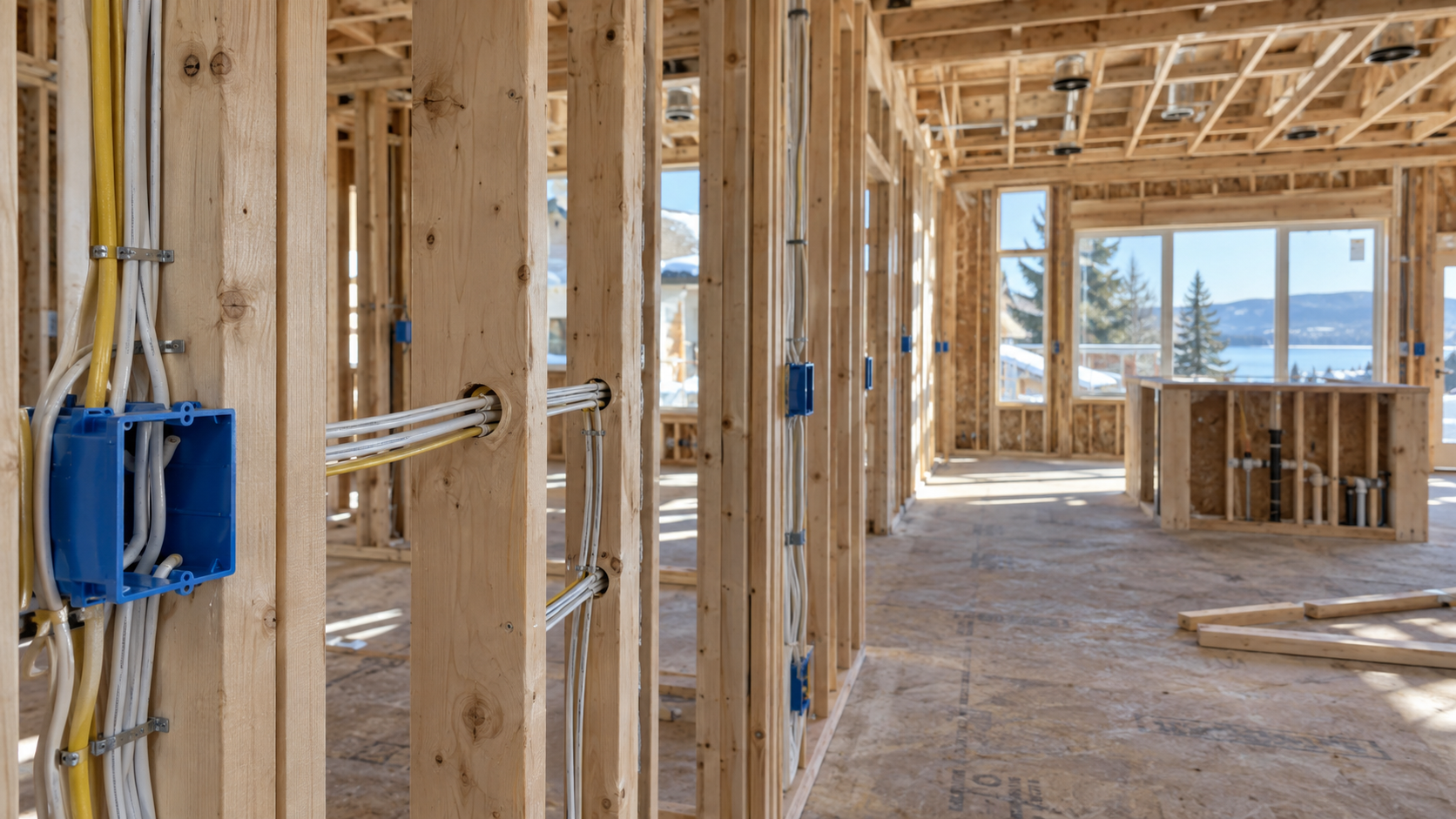
Electrical, Data and Plumbing Rough-Ins
Plan around a realistic future use. Potential items include a conduit route for future wiring, outlets positioned for your furniture, an EV-charging plan, or plumbing rough-ins aligned with a future basement layout.
“EV-ready” and “basement rough-in” can describe different scopes. Ask whether the price covers a pathway, wiring, a circuit, equipment, or only some of those components. Have the relevant trade assess capacity and suitability rather than assuming spare panel spaces establish available electrical capacity.
Before committing, request a marked plan and written scope. A rough-in has limited value if its location does not suit the room you eventually intend to build.
Insulation and Air Sealing
Look for an improvement you can define. The building envelope, the assemblies separating indoors from outdoors, works as a system. Ask which parts of that system change, how the improvement will be assessed, and how ventilation is addressed alongside airtightness.
A blower-door test measures air leakage; it does not measure insulation quality by itself. Natural Resources Canada’s EnerGuide glossary explains the test and related terms.
Request the included and proposed insulation specifications, any airtightness target and the testing process. Where energy savings are part of the sales claim, ask for a home-specific assessment and its assumptions. “Extra insulation” alone is not enough information to establish value.
Window Performance
Compare the actual window, rather than the package name. Natural Resources Canada identifies U-factor as a measure of heat loss through a window assembly; a lower value indicates less heat loss. Solar heat gain also matters, with suitability affected by orientation, shading and the home’s design. Source: NRCan’s guide to windows and exterior doors.
Ask for the exact standard and upgraded products and their whole-window ratings. If the standard specification already performs well, the next step up needs to justify its price. More glazing or a premium appearance is not automatically a comfort improvement.
Heating, Cooling and Ventilation
Correct sizing belongs in the base design. An upgrade discussion should focus on what additional equipment or features achieve, rather than treating a larger system as inherently better.
Ask how the design accounts for the selected layout, windows and insulation. NRCan’s heat-pump guidance specifically emphasizes accounting for building-envelope improvements when assessing heating needs to avoid oversizing.
For an air-conditioning package, request the equipment details, installation scope and explanation of sizing. For comfort concerns in particular rooms, ask the mechanical designer how distribution and controls address those rooms. A thermostat upgrade alone does not establish that a room-level comfort problem has been solved.
How should I compare flooring, cabinet and garage options?
Flooring for Entries and Busy Rooms
Choose for the household using it. Wet footwear, pets, children and cleaning habits belong in the decision. Compare the actual product’s maintenance instructions, moisture limitations, scratch resistance and installation requirements.
Hard flooring is not one uniform category: tile, wood, laminate and vinyl have different characteristics. Carpet can be a practical choice where warmth and comfort are priorities. Avoid paying for a premium label without understanding what changes in the product.
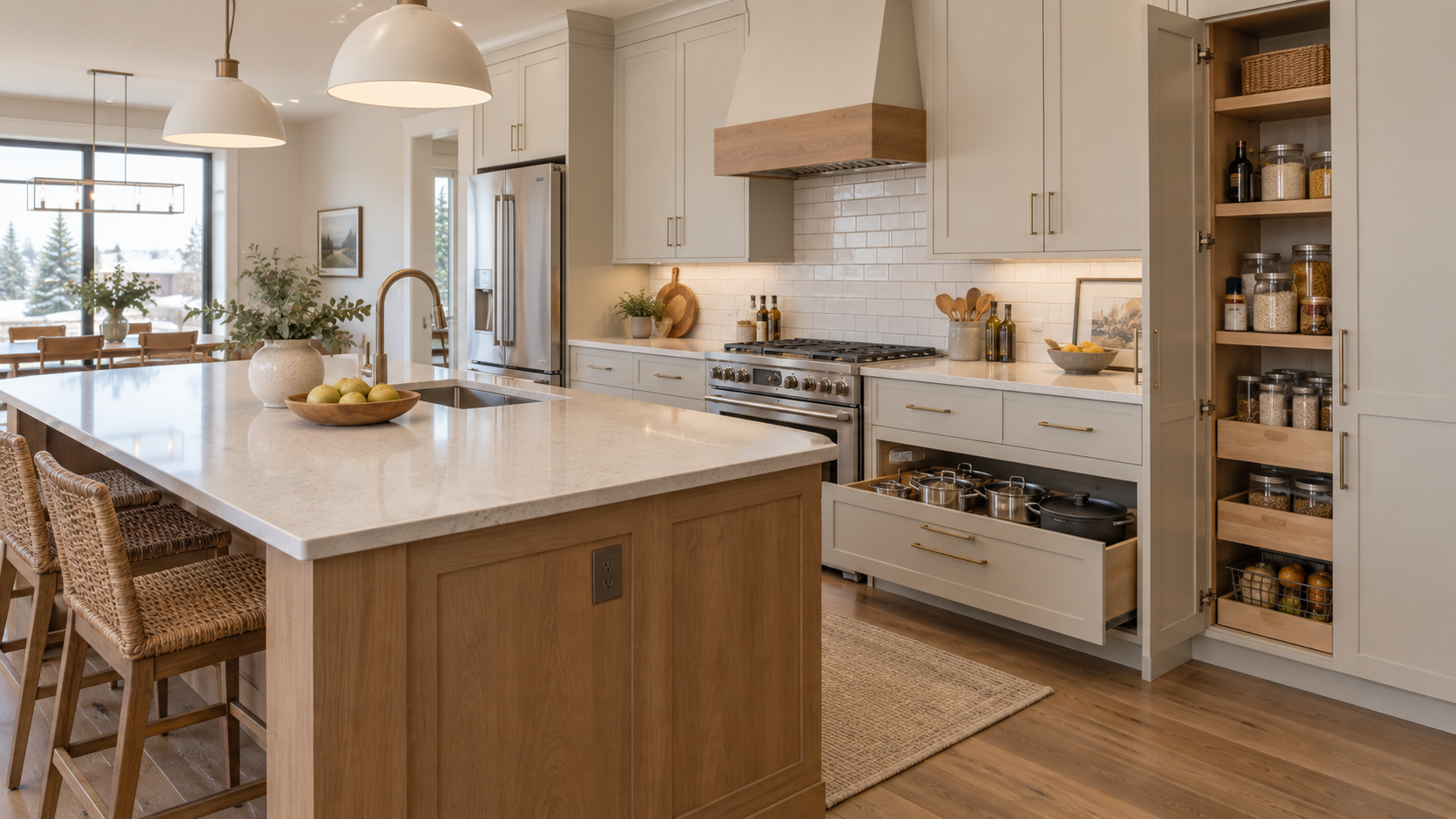
Kitchen Cabinets and Storage
Treat layout and cabinet construction as lasting decisions. Handles and pulls can be relatively straightforward to change, but cabinet boxes, layout, countertop relationships and appliance openings are more involved. Refacing is not always practical or inexpensive.
Evaluate useful drawers, pantry access, clearances and storage before choosing a decorative door profile. You may reasonably prioritize a kitchen feature you will use every day, even if it does not improve energy performance.
For countertops, compare the actual materials, care requirements and price difference. Neither granite nor quartz is automatically the better purchase for every household.
Garage Doors and Future Heating
Assess the garage as a whole. An insulated door deserves a different evaluation in a garage intended to be heated than in one used only for parking. Ask about the door assembly, seals, surrounding construction and the intended heating plan rather than relying on one insulation number.
If you are considering a future heater, request a written explanation of what any preparation includes. Have the relevant professionals confirm the installation requirements. Do not assume that selecting an insulated door makes the entire garage ready for heating.
Which builder upgrades can wait until after possession?
Decorative lighting. If the wiring, switching, support and locations already suit the plan, the fixture style can be a later decision. Confirm any special requirements before postponing a selection.
Premium paint and feature treatments. These can offer personal enjoyment, but they do not need to take priority over a layout problem or a useful rough-in. Consider how much repainting or finish work you are actually willing to arrange after possession.
Hardware and accessories. Compare the builder’s upgrade charge with the complete cost of an alternative, including installation and any standard items you would discard.
Deferring an upgrade does not automatically save money. Paying the builder once can be preferable to paying for a standard product and replacing it shortly afterward. Compare both paths before deciding.
What should I bring to a builder options meeting?
Start with the floor plan, included specifications and a firm allowance for optional changes. Keep a separate allowance for work and purchases needed after possession.
For each option, record:
The standard item and proposed replacement
The complete price, including applicable taxes and related work
The product, model, dimensions or performance specification
The selection deadline and later change charges
Who completes the work and what remains excluded
Finish by reviewing the combined total. Several individually affordable selections can add up to more than the budget allows. Confirm the selections in the builder’s written change process, and direct contract questions to your lawyer before becoming firm.
If you want a second set of eyes on a builder’s options package before committing to selections, call or text me at 780-220-8449. Have the floor plan, included specifications and upgrade pricing ready so we can compare what each option adds to your home and budget.
My Take as a Local REALTOR®
After more than 25 years in new construction, on the trades side through Konstruct (framing, renovations and full contract builds) and the sales side, I look at an options sheet in terms of what the change accomplishes and what replacing it later would involve.
I would rather see a buyer make a few deliberate decisions than purchase a package without understanding its contents. A well-positioned rough-in may support a future plan. A cabinet change may make daily life easier. A window package may improve performance. Each needs a reason that fits the home and the buyer.
My role is to help compare the specifications, costs and practical trade-offs. Technical design, code interpretation and inspections remain the responsibility of the appropriate professionals.
If you are still deciding between a new build and an existing home, my Edmonton new-construction versus resale guide explains how to compare the overall purchase.
Get the New-Construction Buyer Checklist
Choosing upgrades for a new home in Edmonton or the surrounding area? Get my free new-construction buyer checklist, and text me for help comparing your builder’s included specifications, upgrade options and total budget.
If you are still deciding between new construction and resale, I can also help you compare what your budget can buy in both markets.
Call or text me: 780-220-8449
Email: jay@jaysells.ca
Website: jaysells.ca
Your search. Your timeline. No pressure.
Related guides: New construction cost per square foot in Edmonton · Alberta builder contract checklist · Do I need a REALTOR® to buy a new build?
Frequently Asked Questions
Which upgrades add the most resale value?
There is no universal ranking that guarantees a return. Buyer preferences, location, property type and market conditions affect value. Choose upgrades for their documented benefits and your expected use; do not assume the resale price will increase by the amount spent.
Should I pay for triple-pane windows?
Compare the builder’s included windows with the proposed upgrade first. Ask for whole-window performance ratings, the price difference and how the selection suits the home’s orientation. Pane count alone does not establish whether the additional cost is worthwhile.
Is it cheaper to install air conditioning after possession?
It depends on the builder’s price, the proposed equipment and the later installation requirements. Obtain comparable written scopes and have sizing confirmed. Include any preparation already offered by the builder when comparing costs.
Should I finish the basement with the builder or later?
Compare the complete scope, cost, timing and disruption of each option. If you plan to wait, settle the intended layout before selecting rough-ins. Preparation for a future basement does not necessarily include everything required to complete it.
Can I negotiate an upgrade package?
Ask what flexibility the builder offers on the specific home and selections. Evaluate a credit against actual option prices and the items you want. A large promotional allowance has less personal value if it applies primarily to features you would not otherwise purchase.
Sources and Important Information
The sources support the technical background; the upgrade priorities and comparison approach are my professional perspective. This article provides general education, not a property-specific design, inspection or guarantee of savings. Confirm specifications, warranties, inclusions and technical requirements with the builder and qualified professionals.
If you're comparing your options or planning a move in Edmonton, Sherwood Park, Fort Saskatchewan, Devon, Spruce Grove or Stony Plain, I can help you understand how the details fit into the bigger picture.
Call or text me at 780-220-8449
Jay Lewis | REALTOR® | RE/MAX Excellence
Want to see more Edmonton real-estate updates from JaySells.ca in Google? Add JaySells.ca as a Preferred Source.

